
By Ashlee Saddler, EdD, MEd, MSW 2026 CCIRA Conference Featured Speaker
If you take a look around our broader educational landscape, you will see what may appear to be significant amounts of heaviness as educators across the sector are navigating new and profound challenges. These are internal and external challenges that are being faced and impacting how we move through our space, and how we engage in our practice and with each other.
For context, education is my second career. I began as a mental health therapist working with children and families in Denver, Colorado, where I witnessed firsthand the effects of limited educational opportunities, scarce resources, generational poverty, and untreated or undertreated mental health needs. As I transitioned from community and family mental health into education, I recognized the transformative power schools hold for children. Education offered a protective layer—one that often shielded students from the challenges they faced outside of school. This protection came in many forms: caring teachers, engaging activities, meaningful courses, beloved books, and supportive peers. I saw students who struggled at home find stability, confidence, and joy within the walls of their schools.
As a principal, I merged my background in mental health with my work in special education, focusing on improving not only academic outcomes for all students but also the overall wellness of our school community. During my principalship, I recognized the importance of extending the same commitment to wellness to educators and staff—marking the beginning of a more intentional and focused wellness journey.
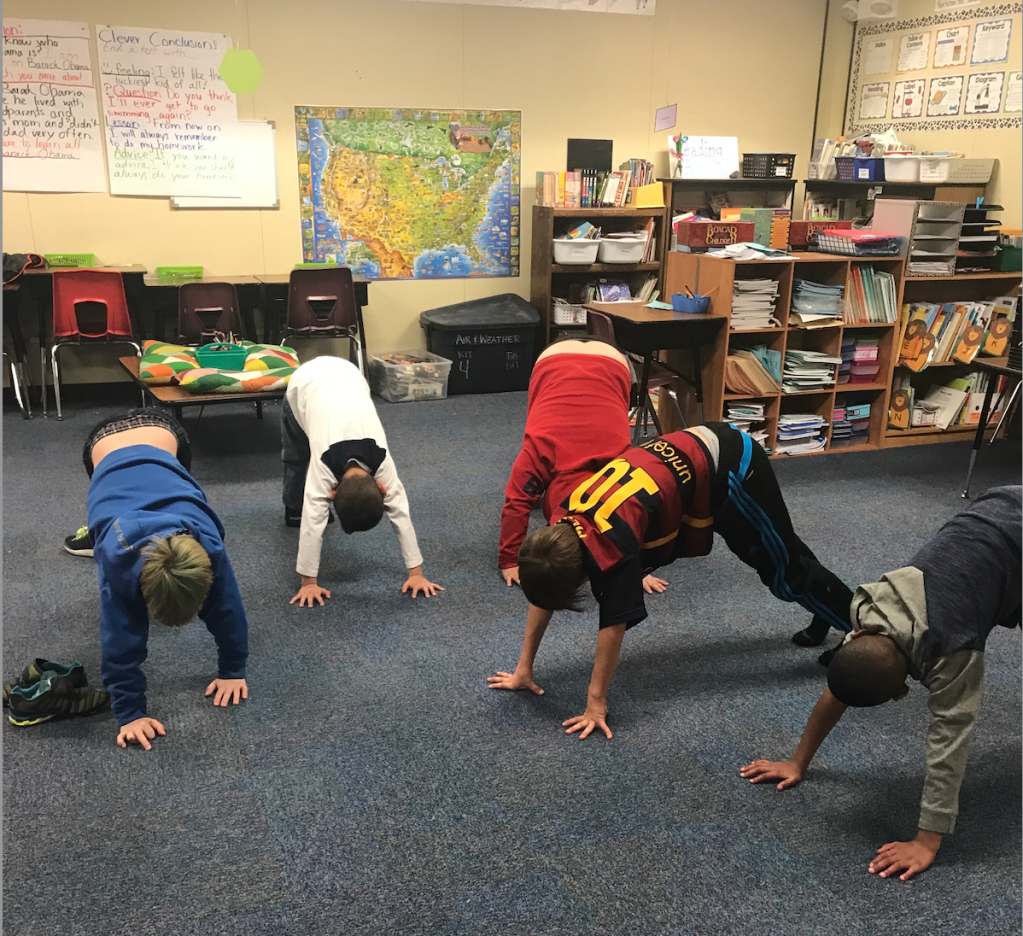
To put my commitment into practice, I carved out time in our school schedule for wellness days for the entire PK-8th grade building complete with guided yoga activities, building sensory jars, engaging in creative writing, exercise through dance, creating aromatherapy balls, and more. This time was essential as it created a healthy outlet for students, allowed the students and teachers to pause and breathe, and gave permission to teachers to build in time to refill their wellness buckets. As we know, no one can pour from an empty cup.


Over the past few years, we have weathered incredible storms and I would be remiss to believe that we will not face more in the near or distant future. So, how do we continue to build our resiliency to weather storms while also embracing the potential for what’s to come? We should not operate in a space where we are surviving traumatic event after traumatic event. We also should not be in a space where we’re waiting for the other shoe to drop, knowing something amiss is on the horizon. These are nice sentiments, but we also need to operate within reality. So how do we continue to fuel the fire for the commitment, passion, and love that we have for our complex and evolving profession? In the midst of complexity and change, how do we create a space where there is stability and balance?
One way to combat the weight of our important, life changing work and infuse hope into our daily practice, is through the act of gratitude. Before you emit a large huff and an internal eye roll, consider the impressive research around gratitude.
- There is a litany of research around the positive impact of gratitude. Expressing gratitude has physical, mental, and psychological benefits, including improved immune responses (Graham, 2022; Madeson, 2025; Mosunic, 2025; Shaffer, 2020).
- Expressing gratitude helps to build individual resiliency (Graham, 2022).
- Expressing gratitude leads to appreciation of what exists and what is present, and it opens one’s eyes to possibilities.
- Graham (2022) indicates that research supports a direct correlation between gratitude and increased cognitive ability, goal attainment, and the ability to manage an increased cognitive load.
- Expressing gratitude rewires the brain (Madeson, 2025) and allows individuals to focus on the positive as opposed to constantly ruminating on the negative.
- Increased cortisol is directly connected to being subjected to persistent stressors. High levels of cortisol have been linked to disease. Expressing gratitude helps to reduce stress hormones such as cortisol (Mosunic, 2025), and helps redirect feelings of helplessness and despair (Madeson, 2025).
How might we express gratitude?
- While journaling is one way, it is certainly not the only way. However, if you do decide to keep a gratitude journal, be very specific about what you’re grateful for in your writing. The clarity and specificity prevents an internal type of toxic positivity.
- Surround yourself with grateful allies. In other words, how can you increase interactions with individuals who will contribute to your human capital and help you see the asset around you, instead of the deficits?
- Keep a few thank-you cards on hand. During my travels with the University of Virginia’s Partnership for Leaders in Education, I started carrying them with me. Over time, I realized how powerful it can be to pause and write a simple note to someone who made an impact during a visit—a teacher who inspired me during a classroom visit, a leader who led with courage, or a team that showed extraordinary care. Most recently, I provided a note to the nutrition services manager at a school who went the extra mile every time we visited. I wanted her to know that her efforts had not gone unnoticed. Those small, handwritten moments of gratitude often carry more weight than we imagine. They remind others that their efforts are seen and valued, and they remind me to stay grounded in appreciation. Gratitude, after all, nourishes both the giver and the receiver.
In a world that often feels heavy, gratitude lightens the load. It reminds us that even in the midst of challenges, there is goodness worth noticing and people worth celebrating. The weight we carry becomes more bearable when balanced by the hope we hold—and gratitude is the bridge between the two.
References
Graham, L. (2022). Gratitude: We are participant and witness all at once. Linda Graham.
Madeson, M.(2025). The neuroscience of gratitude and its effects on the brain. Positive
Psychology. https://positivepsychology.com/neuroscience-of-gratitude/
Mosunic, C.M. (2025). The science of gratitude and how it can affect the brain. Calm.
Shaffer, D.K. (2020). Golden gratitude. The research and reach of appreciation. Alive.
Dr. Ashlee Saddler is a transformational coach, educator, and purpose-driven leader with more than 18 years of experience across K–12 education, higher education, and nonprofit sectors. She currently serves as District Support Chief for the University of Virginia’s Partnership for Leaders in Education (UVA‑PLE) and as Senior Director of Leadership at the Public Education and Business Coalition (PEBC). In these roles, she partners with school and district leaders across the country to strengthen instructional practice, grow leadership capacity, and drive sustainable, system-level change. Ashlee’s journey began as a mental health therapist, a foundation that continues to shape her whole-person approach to leadership and coaching. She has served as a principal, assistant principal, and Director of Culturally and Linguistically Diverse Education, leading equity-centered initiatives that resulted in significant academic gains for multilingual learners and historically underserved students. Through Saddler Consulting, LLC, Ashlee provides executive coaching, leadership development, and keynote speaking across education, corporate, and nonprofit spaces. She holds master’s degrees in both social work and education, and a doctorate from Baylor University, where her research focused on professional learning for school leaders. Ashlee’s work is grounded in helping others unlock potential, lead with intention, and create lasting change.
 CCIRA Professional Development Blog