Writing Ideas: Keeping it Real

by Amy Ludwig VanDerwater, 2026 Conference Featured Author

Right now, as millions flirt with AI partners, discuss suicide with ChatGPT, doomscroll, laugh at fake videos of bunnies jumping on trampolines, soothe loneliness by talking with Alexa, and settle in for hours of gaming in both dingy basements and luxurious leather chairs, snow falls softly outside. One cardinal swoops across a cold winter sky.  This small, feathered flash of red may go unnoticed though; many of us are looking at digital windows instead of out of glass ones. Our bodies are in the real world, but our minds are in the cloud. 

As writing teachers, we show our charges how to analyze mentor texts, try craft moves, and study sentence structure. And while writing craft matters, it is important to remember that literature does not exist to be deconstructed. We humans write to share ideas, explore feelings, teach concepts, tell stories, and express opinions. Humans write to connect with other humans. Artists write and paint and dance and sing about their ideas. Yet often, our young writers lament, “I don’t have any ideas.”

In this very-virtual time in history, we must remind our students that the concrete world of our senses is a meaningful and worthwhile place to spend time and examine. It is our job as teachers of writing to help students find ideas by (re)connecting them to the actual, physical world of planet earth. How do we help our digital-native students believe they can conjure and elaborate on their own ideas without relying on Gemini?

Turn Tech Off When Not in Use – We can turn interactive whiteboards on when we use them and turn them off when we are finished using them. This models intention – we turn technology on when we need to use it. Screens need not constantly stare at us.

Read Books Straight Through – We can read whole poems and books straight through, allowing students to get lost in texts. By reading whole texts aloud, we give students new worlds to inhabit and imagine. Listening to whole texts focuses and lengthens attention and builds empathy. We can always return to these texts later to evaluate craft moves or character traits.

Visit Nature Outside – We can take children outside to make shadows, gather oak leaves, watch a robin look for worms, reminding these children that our world is beautiful, interesting, and worth learning about. We can teach them the names of a few local plants and animals so that they will recognize and care about these plants and animals as fellow living things.

Bring Nature Inside – We can set up a wee nature table, inviting students to share found shells and stones and pinecones, helping them notice and wonder about pocket-sized, free treasures. Many of the best treasures, after all, are free, and free is for everyone.

Keep Notebooks – We can write for a few minutes each day, by hand, in paper notebooks. By doing so, we help students develop agency as they realize one need not be plugged in to create. Writing in notebooks, students realize that thoughts come through the motion of a hand on the blankness of a page with the inkness of a pen.

Be Present – We can turn our own phones off when in our students’ presence. When we do this, we silently say, “I will not be distracted from this important time we have together.”

Make Art – We can make things with our hands, folding origami stars or painting with watercolors during a ten minute transition. Students deserve to know that their growing bodies can manipulate materials in the 3-D world as well as their thumbs can manipulate pixels in the 2-D world.

Make Peace with Quiet – We can provide a few moments of quiet, allowing students to put their heads down or close their eyes or breathe deeply. While they (and we) may be uncomfortable at first, they (and we) will come to trust that every quiet space need not be filled with beeping and Googling. Brains think new thoughts when given such space. 

Engage Students’ Senses – We can offer our students tiny sensory experiences: smelling cinnamon, touching sheepskin, tasting cider. While video game characters fly and shoot aliens, human bodies touch and taste and smell and hear and see. We cannot control the hours of online time students spend at home, but we can feed their senses as we look at light through a prism or pass around a scrap of velvet. We can remind students that human beings have senses and that ideas come through these senses.

Listen and Model – When students say “I don’t know what to write,” we can listen. Rather than suggesting topics, we can share bits of our own real lives and pages from our own paper notebooks, modeling how we find ideas through the act of writing, modeling how we allow our thinking to change and do not expect perfect ideas to arrive fully formed.  We can trust that – through our trust – young writers can and will welcome ideas of their own.

Yes, AI is everywhere. Yes, many parents know students’ grades before students do, and many young people are digitally tracked wherever they go. Yes, children and adults both play hours of video games daily. Yes, it is difficult to know what is real and what is not real online. It’s all true. But so are cardinals true. So is snow true. And a most precious role of the writing teacher is to point to cardinals, to encourage students to touch snow. For real.

For ideas’ sake.

Amy Ludwig VanDerwater is author of several poetry and picture books for children, including Forest Has a Song, With My Hands: Poems About Making Things,Write! Write! Write!, and her latest, The Sound of Kindness. A former elementary school teacher and longtime writing teacher with a master’s degree from Teachers College, Columbia University, Amy is also author of the professional book Poems Are Teachers: How Studying Poetry Strengthens Writing in All Genres. She has blogged for children at  The Poem Farm since 2010 and is interested in your ideas about keeping it real in education. Find Amy online HERE, and watch for her forthcoming book, John and Betsy, a story told through poems.

Purposeful Read-Alouds to Build Comprehension

By Katie Kelly, 2026 CCIRA Featured Speaker

With the increased attention on phonics instruction, we cannot overlook the essential purpose of reading as construction of meaning. Comprehension and critical thinking skills must be prioritized alongside foundational skills such as phonics, while also honoring and centering students’ cultural and linguistic backgrounds (Compton-Lilly et al., 2023; Duke et al., 2021). Expanding beyond narrow ideas of reading instruction to include more robust and comprehensive approaches increases students’ comprehension, engagement, and joy when reading.

Purposeful Read-Alouds

Purposeful daily teacher read-alouds serve as an easy and effective approach to supporting key aspects of reading development and engagement. Read-alouds enhance language comprehension by building students’ background knowledge, academic vocabulary, and understanding of sentence structure—key aspects that contribute to overall reading comprehension. In addition, read-alouds provide opportunities for adults to model bridging processes such as fluent reading, self-regulation, and strategic thinking (Duke & Cartwright, 2021). By modeling their own think aloud processes before, during, and after reading, adults can demonstrate how proficient readers monitor comprehension, ask questions, and make meaning from text. Thus, read-alouds not only strengthen essential language comprehension skills but also promote the cognitive and metacognitive habits necessary for independent, joyful reading.  

Intentionally Selecting Read-Alouds 

When selecting texts for read alouds, choose books that serve as mirrors, reflecting students’ identities, interests, and cultures allowing children to see themselves reflected, affirming their identities, making them feel valued, and increasing their interest in reading. It’s also important to select books offering windows into different stories, experiences, and perspectives to expand children’s worldviews (Bishop, 1990). When read-alouds intentionally represent a range of experiences and perspectives, children develop cultural awareness, a sense of belonging, empathy, and a deeper sense of shared humanity. 

Consider:

  • How does the book reflect students’ identities, cultures, and interests? 
  • Does it challenge stereotypes and move beyond single stories?
  • Is the text authentic and accurate? 
  • Could the text cause harm? If so, for whom? 

Secondly, it’s important to consider instructional entry points for read-alouds. Choose texts with rich language, complex themes, and opportunities for critical thinking and discussion. Explore standard alignment and students’ academic and social-emotional needs.

Consider:

  • What do I want students to think about, question, or take away?
  • How will this text connect with standards and help build background knowledge and vocabulary?  
  • What potential challenges may impede students’ understanding? 
  • Where can I pause to model comprehension strategies (e.g. connections, summary, inferences, asking questions, etc.)? 
  • What other texts can be layered to deepen understanding? 

Plan ahead for unfamiliar vocabulary, abstract concepts, or cultural references. Identify moments in the text to pause and clarify ideas, build background knowledge, and invite discussion. These instructional entry points create opportunities to deepen students’ comprehension, engage in discussion, and nurture classroom community. 

Book List Resources: 


Read-Aloud Using the Multiple Read Framework 

To support deeper, critical comprehension during read-alouds, engage students in multiple readings of the same text. The first read introduces the text, the second builds shared understanding, and the return read promotes critical comprehension (Kelly et al., 2023).

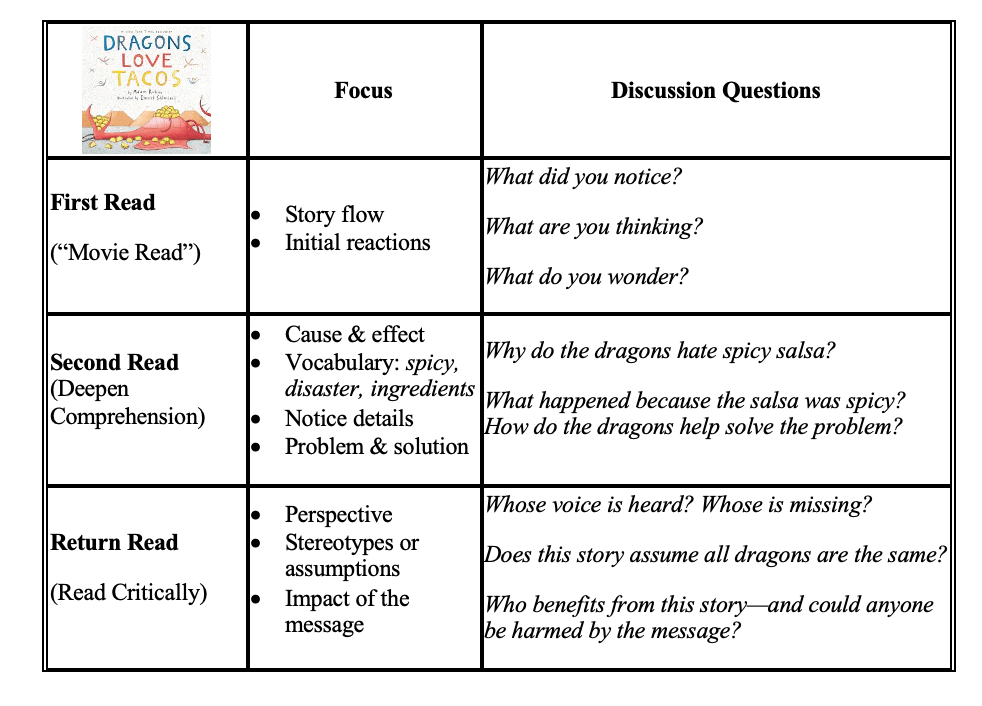
First Read – The “Movie Read”
Read the book in its entirety without interruption, allowing students to enjoy the story and react emotionally. Ask open-ended questions like “What did you notice?” or “What surprised you?” to build familiarity and set the foundation for deeper engagement.

Second Read – Deepen Comprehension
Revisit the text to explore vocabulary, concepts, character motivations, plot development, and key ideas to build comprehension. Model proficient reader strategies through think alouds (e.g. connect, infer, ask questions, etc.). 

Return Read – Read Critically
Analyze the text to examine perspective, power, and bias. Encourage students to question the text, challenge stereotypes, and consider alternate viewpoints. 

Sample critical questions include:

  • Whose voice is heard? Whose is missing?
  • What assumptions does this story make?
  • How might a different character tell this story?
  • Who benefits from the message of this text—and who might be harmed?

Tip: If pressed for time to reread the entire book for the second and return reads, revisit intentionally selected excerpts of the text based on instructional goals.

Sample Multiple Read Framework: Dragons Love Tacos by Rubin

This story helps readers understand how paying attention to details matters—even small ones like what kind of salsa is served. It also shows how trying to do something kind (like throwing a party) can have unexpected results when you’re not careful.

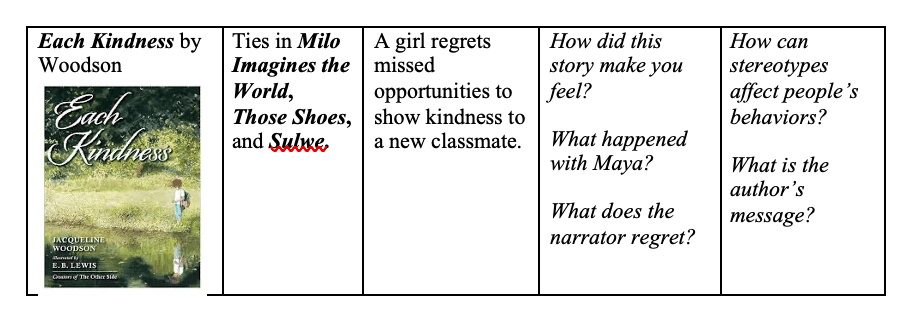
Next compare with the dragon in the The Paper Bag Princess by Munsch, then explore lessons comparing the main character, Elizabeth with female characters in traditional fairy tales. The following text set demonstrates how to build on ideas and perspectives introduced in each subsequent book. 

Text Set Connections & Extensions:

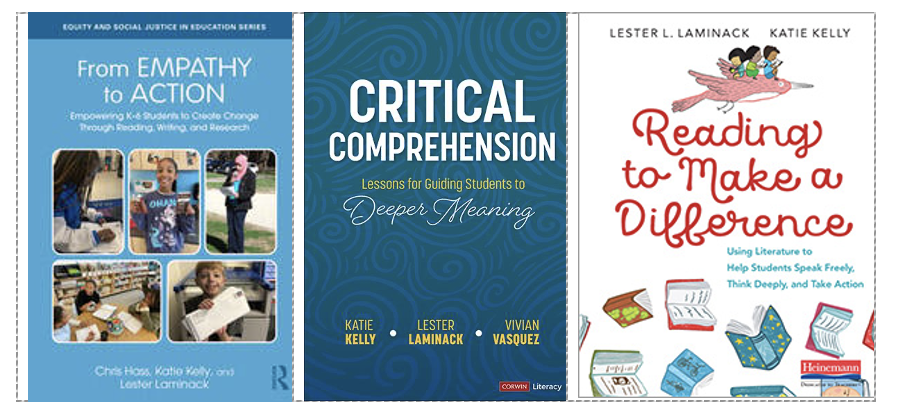
For more sample lessons using the multiple read framework, see Critical Comprehension: Lessons for Guiding Students to Deeper Meaning

Read-Aloud as Transformation 

In today’s classrooms—especially amid rising book bans and cultural erasure—it is essential to use read-alouds to center students’ voices, celebrate diverse stories, and encourage critical comprehension. Through intentional planning and repeated engagement with thoughtfully selected read-alouds, students develop not only as better readers but more empathetic, informed, and justice-oriented citizens. 

Reflect: 

  • How will you bring more purpose to your read-alouds? 

For more, check out Katie’s co-authored books including her newest book From Empathy to Action: Empowering K–6 Students to Create Change Through Reading, Writing, and Research. She can be contacted at ktkelly24@gmail.com

References

Bishop, R. S. (1990). Mirrors, windows, and sliding glass doors. Perspectives: Choosing and Using Books for the Classroom, 6(3), ix–xi.

Compton-Lilly, C., Spence, L. K., Thomas, P. L., & Decker, S. L. (2023). Stories grounded in decades of research: What we truly know about the teaching of reading. The Reading Teacher, 77(3), 392–400.

Duke, N., Ward, A.E., Pearson, P.D. (2021). The Science of Reading Comprehension Instruction. The Reading Teacher, 74(6), 663-672.

Duke, N. K., & Cartwright, K. B. (2021). The science of reading progresses: Communicating advances beyond the simple view of reading. Reading Research Quarterly, 56(1), 25–44.

Hass, C., Kelly, K., & Laminack, L. (2026). From Empathy to Action: Empowering K–6 Students to Create Change Through Reading, Writing, and Research. Routledge.

Kelly, K., Laminack, L., & Vasquez, V. (2023). Critical Comprehension: Lessons for Guiding Students to Deeper Meaning. Corwin.

Laminack, L. & Kelly, K. (2019). Reading to Make a Difference: Using Literature to Help Children Think Deeply, Speak Freely, and Take Action. Heinemann. 


The Weight We Carry, the Hope We Hold: Building Resilience and Renewal

By Ashlee Saddler, EdD, MEd, MSW 2026 CCIRA Conference Featured Speaker

If you take a look around our broader educational landscape, you will see what may appear to be significant amounts of heaviness as educators across the sector are navigating new and profound challenges. These are internal and external challenges that are being faced and impacting how we move through our space, and how we engage in our practice and with each other. 

For context, education is my second career. I began as a mental health therapist working with children and families in Denver, Colorado, where I witnessed firsthand the effects of limited educational opportunities, scarce resources, generational poverty, and untreated or undertreated mental health needs. As I transitioned from community and family mental health into education, I recognized the transformative power schools hold for children. Education offered a protective layer—one that often shielded students from the challenges they faced outside of school. This protection came in many forms: caring teachers, engaging activities, meaningful courses, beloved books, and supportive peers. I saw students who struggled at home find stability, confidence, and joy within the walls of their schools.

As a principal, I merged my background in mental health with my work in special education, focusing on improving not only academic outcomes for all students but also the overall wellness of our school community. During my principalship, I recognized the importance of extending the same commitment to wellness to educators and staff—marking the beginning of a more intentional and focused wellness journey.

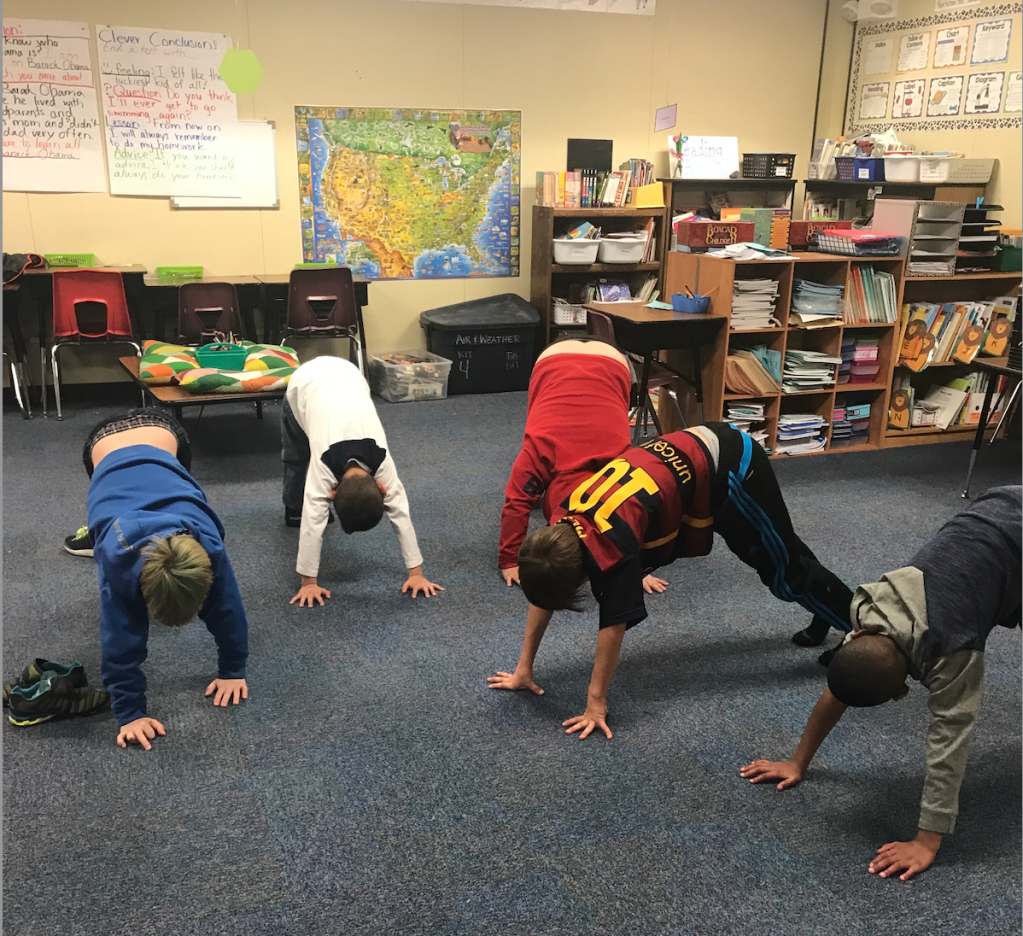
To put my commitment into practice, I carved out time in our school schedule for wellness days for the entire PK-8th grade building complete with guided yoga activities, building sensory jars, engaging in creative writing, exercise through dance, creating aromatherapy balls, and more. This time was essential as it created a healthy outlet for students, allowed the students and teachers to pause and breathe, and gave permission to teachers to build in time to refill their wellness buckets. As we know, no one can pour from an empty cup. 

Over the past few years, we have weathered incredible storms and I would be remiss to believe that we will not face more in the near or distant future. So, how do we continue to build our resiliency to weather storms while also embracing the potential for what’s to come? We should not operate in a space where we are surviving traumatic event after traumatic event. We also should not be in a space where we’re waiting for the other shoe to drop, knowing something amiss is on the horizon. These are nice sentiments, but we also need to operate within reality. So how do we continue to fuel the fire for the commitment, passion, and love that we have for our complex and evolving profession? In the midst of complexity and change, how do we create a space where there is stability and balance? 

One way to combat the weight of our important, life changing work and infuse hope into our daily practice, is through the act of gratitude. Before you emit a large huff and an internal eye roll, consider the impressive research around gratitude. 

  • There is a litany of research around the positive impact of gratitude. Expressing gratitude has physical, mental, and psychological benefits, including improved immune responses (Graham, 2022; Madeson, 2025;  Mosunic, 2025; Shaffer, 2020). 
  • Expressing gratitude helps to build individual resiliency (Graham, 2022). 
  • Expressing gratitude leads to appreciation of what exists and what is present, and it opens one’s eyes to possibilities. 
  • Graham (2022) indicates that research supports a direct correlation between gratitude and increased cognitive ability, goal attainment, and the ability to manage an increased cognitive load. 
  • Expressing gratitude rewires the brain (Madeson, 2025) and allows individuals to focus on the positive as opposed to constantly ruminating on the negative. 
  • Increased cortisol is directly connected to being subjected to persistent stressors. High levels of cortisol have been linked to disease. Expressing gratitude helps to reduce stress hormones such as cortisol (Mosunic, 2025), and helps redirect feelings of helplessness and despair (Madeson, 2025). 

How might we express gratitude? 

  • While journaling is one way, it is certainly not the only way. However, if you do decide to keep a gratitude journal, be very specific about what you’re grateful for in your writing. The clarity and specificity prevents an internal type of toxic positivity. 
  • Surround yourself with grateful allies. In other words, how can you increase interactions with individuals who will contribute to your human capital and help you see the asset around you, instead of the deficits? 
  • Keep a few thank-you cards on hand. During my travels with the University of Virginia’s Partnership for Leaders in Education, I started carrying them with me. Over time, I realized how powerful it can be to pause and write a simple note to someone who made an impact during a visit—a teacher who inspired me during a classroom visit, a leader who led with courage, or a team that showed extraordinary care. Most recently, I provided a note to the nutrition services manager at a school who went the extra mile every time we visited. I wanted her to know that her efforts had not gone unnoticed. Those small, handwritten moments of gratitude often carry more weight than we imagine. They remind others that their efforts are seen and valued, and they remind me to stay grounded in appreciation. Gratitude, after all, nourishes both the giver and the receiver.

In a world that often feels heavy, gratitude lightens the load. It reminds us that even in the midst of challenges, there is goodness worth noticing and people worth celebrating. The weight we carry becomes more bearable when balanced by the hope we hold—and gratitude is the bridge between the two.

References

Graham, L. (2022). Gratitude: We are participant and witness all at once. Linda Graham.

Madeson, M.(2025). The neuroscience of gratitude and its effects on the brain. Positive 

Psychology. https://positivepsychology.com/neuroscience-of-gratitude/

Mosunic, C.M. (2025). The science of gratitude and how it can affect the brain. Calm. 

Shaffer, D.K. (2020). Golden gratitude. The research and reach of appreciation. Alive. 

Dr. Ashlee Saddler is a transformational coach, educator, and purpose-driven leader with more than 18 years of experience across K–12 education, higher education, and nonprofit sectors. She currently serves as District Support Chief for the University of Virginia’s Partnership for Leaders in Education (UVA‑PLE) and as Senior Director of Leadership at the Public Education and Business Coalition (PEBC). In these roles, she partners with school and district leaders across the country to strengthen instructional practice, grow leadership capacity, and drive sustainable, system-level change. Ashlee’s journey began as a mental health therapist, a foundation that continues to shape her whole-person approach to leadership and coaching. She has served as a principal, assistant principal, and Director of Culturally and Linguistically Diverse Education, leading equity-centered initiatives that resulted in significant academic gains for multilingual learners and historically underserved students. Through Saddler Consulting, LLC, Ashlee provides executive coaching, leadership development, and keynote speaking across education, corporate, and nonprofit spaces. She holds master’s degrees in both social work and education, and a doctorate from Baylor University, where her research focused on professional learning for school leaders. Ashlee’s work is grounded in helping others unlock potential, lead with intention, and create lasting change.

We Are Teaching Writers

By Jennifer Vincent, 2026 CCIRA Featured Speaker

By Jen Vincent

”I decided to switch topics, so I started over,” a student writer shared with the class.

My shoulders tightened, so I paused and took a breath before responding. “Yeah, okay, writers do that. Sometimes an idea isn’t working and you need to switch gears,” I said.

It was the end of independent writing time, and I was doing a quick check in with the class, calling on each student to share how they spent their time. Students shared that they made progress or added dialogue or added details…and then this.

This group of 6th grade student writers had already been working on their personal narratives for some time. I knew starting over was going to make it harder for this particular student to make it through their process before the quarter deadline, but I wholeheartedly believe in allowing students space to find their own way. Even though I started to feel the tension in my body, I trusted the student writer and didn’t add my stress to their process. 

With over 20 years in education, you might imagine that taking this in stride would come easily by now, but I often find myself still unlearning and re-learning, especially when it comes to time. 

Guiding Over Dictating

Take this example. If the student starts over and doesn’t end up with a finished piece or with a piece as polished up as it could be, that is a great learning opportunity for them. If the student starts over and finds momentum from the shift, that is also a great learning opportunity for them. I have a sense of what starting over might mean, but if my goal is to empower student writers to trust themselves as they learn to live the life of a writer, then I need to allow them to make choices and learn from the consequences. As a guide, I can notice and ask questions and help them learn as they reflect. 

In my book Living the Life of a Writer: 6 Practices Student Writers Have, Know, and Do, I invite you to allow me to be your guide as well. Throughout the book, I offer opportunities for you to pause and reflect on your lived experiences and how they may or may not influence you as a writing teacher. Reflection is a powerful tool that allows us to re-vision our writing instruction. In reflecting, we take an honest look back in order to make a plan to move forward. We are not simply hitting refresh and hoping for a new outcome. Instead, we are reconnecting with purpose and making changes that are aligned with our student needs. Hitting refresh in this way is reenergizing. 

Speaking of reflection, I’d like to invite you to pause and reflect now. Allow yourself to explore these questions in a free write and see how you might re-vision how you support student writers. 

A Moment to Reflect

  1. Recall times in your teaching when a student made a writing choice that didn’t match what you would have done or what you would have suggested.
  2. What did it feel like in your body when this happened?
  3. Looking back now, what advice do you have for yourself so that you might give students space to explore their process?

Trusting The Process

Writers know that writing is a process is one of the practices I share in Living the Life of a Writer. While writing seems like a linear process, any writer will tell you that it’s much more complex than that. Sure, we brainstorm, choose an idea, draft, revise, edit, publish…but each of these might take more time than we anticipate. We might find ourselves making progress and then needing to redirect. We might think we’re almost done and then decide to scrap something and rewrite. 

Our job is to trust that writing is a process and to give student writers space to find their way (with our guidance) so that they also develop trust in the process. We know there are deadlines to meet and standards to grasp and curriculum to cover. Yes, we are teaching writing skills, but more importantly, we are teaching writers. 

Jen Vincent (she/her/ella) is a writer, educator, entrepreneur, and lover of life who celebrates the human experience through writing. With extensive experience in special education, curriculum development, instructional technology integration, teacher coaching, and working with multilingual learners, she currently serves as a 6th-8th grade Middle School Social Studies/Language Arts Teacher for Bannockburn School, a K-8 district in a northern suburb of Chicago. She is a National Board Certified Teacher in Early/Middle Childhood Literacy and an active member of the National Council of Teachers of English. In 2024, she was honored with NCTE’s Don H. Graves Award for Excellence in the Teaching of Writing. As the founder of Story Exploratory, she offers workshops, coaching, and professional development to help writers explore what it means to live the life of a writer. Living the Life of a Writer: 6 Practices Student Writers Have, Know, and Do is her first book on student-centered, inquiry-based writing instruction. Learn more at storyexploratory.com and at @storyexploratory on Instagram.

In Honor of Karen Hartman

In September, we lost Karen Hartman, a fierce advocate for Colorado teachers. Throughout her years at Thornton High School, in the secondary section at NCTE, as director of the Colorado Writing Project, and co-director of The Colorado Language Arts Society, Karen never gave up. Here, four friends pause to pay tribute. We all gathered at CCIRA with Karen regularly over the years, and hope this post will remind you of the power of teaching communities. We hope to see you this February in Denver. 

No recipes

by Penny Kittle

Karen and I stayed up late eating her layered carrot cake at her dining room table after the fall CLAS conference in 2023. What makes this frosting, rich and creamy, yet light? I asked. She snickered. Karen didn’t believe in recipes, only in cooks, in instinct, in practice. You cannot replicate someone else’s good work; you must learn to calibrate on your own. Watch the pots that boil. Add salt. If your baking didn’t produce what you’d hoped, adjust. You are better off examining your own moves than criticizing or blaming the raw materials. Sit beside a student and listen, nudge, support. Celebrate their creations. I will miss those conversations, her blue eyes centered on me, her easy laugh, her love of a good story. I will miss her stacks and stacks of books and her joy in sharing them. 

Karen had left her high school classroom when I met her; she was a teacher of teachers where she remained for decades. Karen helped me persist in writing through joy and challenge. Nothing is harder, she said, than composing your ideas, your stories, and your hopes. She wrote with teachers at every meeting, every conference, every opportunity. We both echoed Don Graves, You have stories to tell that no one can tell  but you. Once teachers realize how important those stories are to them, Karen believed, they’ll put time to write in every lesson plan. (You say you don’t have time? Some new bloated textbook adoption in your district tells you this? Karen would have a response for that and it might have exceeded her self-imposed 5-f*cks-a-day rule.) Karen knew the emptiness of teaching that centers curriculum instead of students. She had zero patience for anyone who dictated the moves of teachers in our complex work. And she’d tell you: blue eyes sparking, searching, fierce and kind at once.

Karen believed in CCIRA. Teaching can be isolating work. We need each other. Conferences put teachers in conversation, and this one in particular, has always centered teacher research and experience. Quality ingredients are essential in cooking well, and a conference composed of authenticity, spontaneity, gatherings at coffee stands and in small sessions to explore and think are key to community. CCIRA cooks. They invite speakers to remind us how large and diverse this work is—spread across countries and generations and innovations. We gather. We learn together. CCIRA simultaneously affirms our instincts about learning as it challenges them. I leave inspired every time. 

I know this: Karen Hartman’s love for teachers and their students will reverberate in my life always. I raise a glass to my friend; I raise it high. May we all live our lives with such courage, kindness, and generosity.

A Cherished Friend 

By Stevi Quate

Karen was my cherished friend and feisty colleague. Without her by my side, my writing – personal and professional – wouldn’t have been the same. The flights to conferences and evenings after the sessions wouldn’t have been the same. And the professional literature we studied together wouldn’t have had the same impact. She nudged me and others to do what was best for students and not to take short cuts, and when she saw practices that disengaged students, she spoke out. Her impact on me and on educators around the globe was robust.

Dave Wendelin, former CLAS President and Director for the National English Honor Society for Secondary Schools (http://www.nehs.us/), recognized the impact Karen had on, literally, thousands of educators: 

I doubt there has been a more dedicated teacher and student advocate than Karen Hartman. Strong in opinion and visionary, Karen has unpacked the work of thousands of educators across the country…She had little patience for any barriers that might limit the independent decision-making of teachers as they nurtured their students.

Along with teaching at the University of Colorado at Denver, presenting at numerous conferences including CCIRA, editing CLAS’ journal Statement and serving as English Department Chair at Thornton High School, Karen poured her energy into keeping Colorado Writing Project* fresh and relevant.  As the director for more than a quarter of a century, she mentored and modeled and encouraged – and fed us her famous chocolate chip cookies. 

A common theme from teachers in the summer workshops was gratitude. Here’s what Hayley, a teacher in one of her projects, said about Karen: 

I wanted to thank you for opening my eyes to a new and better way of teaching writing. With only two years of teaching under my belt, I am always looking for the best practices; however, no staff development or PLC has come close to the type of life-changing experience this has been. Thank you.

It wasn’t just new teachers who expressed their gratitude. For instance, Alice wrote:

Your mom was one of my most memorable professors in grad school and was a wonderful mentor to me for many years after. She got me involved and taught me what it meant to be a professional educator. Even now, 23 years into the profession, I draw upon all she taught me. Her legacy is a great one.

It wasn’t just Colorado educators who were impacted by her vision. Back in the early 90s, CCIRA invited several teachers from South Africa to the conference. After attending one of Karen’s sessions, they wanted to learn more, so Karen invited them to attend one of CWP’s two-week workshops.  Not only did Karen sponsor their visit, but she also housed and fed them and made them feel at home. At the end of the two weeks, those educators wanted to share the CWP experience with their colleagues back in the very poor township outside of Dundee, South Africa. So the next summer, Sheila Kaehny and I joined Karen for this adventure.

During those two weeks, we learned side by side with the teachers. Mornings would begin with gathering together in a large circle. Someone would begin a song and eventually everyone joined in. Often a few teachers would move into the circle center dancing to the impromptu singing. For the rest of the day, the writing project looked like what we did back in Colorado: teachers would study professional literature about teaching writing and write themselves. From the participants’ writing, Karen learned that one teacher needed to increase the number of cows he owned before we could woo his future wife. Karen weaved his story into a personal narrative that she shared back in Colorado, causing insight into a different culture. 

Just recently one of South African educators called Karen her “global mama” and mourned her loss:  

So sad to hear the news about the passing away of our dearest friend and mother, grandmother from ashore. May her spirit live long for generations to come. Karen will be dearly missed around the globe.

My cherished friend and feisty colleague created a legacy to be celebrated and will, indeed, be missed.

*To get an idea about CWP, watch this video (https://www.youtube.com/watch?v=8xFHjPm0qYI) made by one of the teachers who studied with her.

Going Online 

By Sarah Zerwin

On a series of sunny June days in 2020, I sat on my back deck with my Google Classroom screen shared with Karen via video chat. We worked together for hours to transition the Colorado Writing Project curriculum from a two-week in-person workshop to a four-week online experience with both synchronous and asynchronous elements. Like everything else in education during that time, CWP had to pivot on a dime from what it had always been to something we had never imagined it would need to be. But Karen was determined—determined to offer a meaningful experience for teachers, regardless of the restrictions and challenges imposed by the pandemic. 

And that was Karen. Determined to offer a meaningful professional development experience to teachers. For many summers, that’s exactly what she did with the Colorado Writing Project, for teachers all across Colorado (and then for teachers across the country once we had the online curriculum built out!). As CWP director for many years, Karen was keeper of the grail—the CWP curriculum. When I came on board around 2010 and found myself at Karen’s dining room table with the other teacher consultants during the annual spring retreat, I was amazed to learn that the curriculum document in the binder in front of me was about three decades old, built and revised by literal legends of the Colorado English Language Arts world. I didn’t feel worthy. 

Fueled by Karen’s chocolate chip cookies, bottomless bowls of chocolate, and both a breakfast and lunch buffet, we made our way through each day of the two week curriculum, updating as needed to adjust to the evolving needs of teaching writing. I worked madly to upload the intricately-woven document onto my brain, amazed to see the inner workings of the most meaningful professional learning experience I had ever done myself as a CWP participant. Would I ever be able to actually bring this curriculum document to life and honor the legacy it represented? 

But Karen’s confidence in me made it all possible. Karen saw capabilities in me that I didn’t see. Her encouragement and support are a huge reason I was able to persist through several years trying to get to what eventually became my first book for teachers. In every opportunity I have, I channel Karen’s dedication to serving up professional learning experiences that challenge teachers, honor them as professionals, and care for them as human beings. In every moment planning for what happens in my classroom, I channel Karen’s dedication to pedagogy that challenges my students, honors them as readers and writers, and cares for them as human beings. 

See it was all so clear to Karen. 

Karen put in the work because it mattered for teachers and their students and the authenticity of their experiences in the classroom. That was it. That was all. And that is everything. 

An Unsent Letter to My Mentor By Sheila Kaehny

Dear Karen,

I remember a chilly April morning at the Teen Lit Conference when we met at the Tivoli before our traditional “What’s New In Young Adult Lit” presentation. You were at a table in the back, with a thick stack of handouts (yellow for you, green for me) and your red tote bag filled with thick hardovers decorated with sticky notes marking passages for read-aloud. 

I remember your smile, your Diet Coke with lime, your etched silver earrings and matching necklace, and your perfect pink fingernails.  

You were always excited to present our new YA titles, to share books to get kids reading. In your earnest “this is what’s best for kids” voice, booktalking was your gift.  You were a natural teacher, and it came through in your carefully crafted presentations.  I saw it in your writing conferences with kids and adults and when you listened and coached, helping people find answers.  You loved it all.  Both teaching and teachers annoyed you every once in a while, too, but you loved it (and all of us) just the same.

You presented at CCIRA every year. In your world, continuous improvement was teachers gathering together at conferences like the Fall Writing and CLAS for professional development.  Do you remember how cranky I was about giving up my Saturday morning soccer to participate in a weekend conference?  “Sheila, dear,” you said to me, “you can play soccer next weekend. You need this right now.” And you were right.  No matter how exhausted I was after a long weekend of learning, I left each conference energized, buzzing with ideas. 

Because of you and all those years of CWP summer writing workshops, hundreds of teachers across Colorado set aside worksheets and five paragraph essays and replaced them with authentic, meaningful instruction.  

No one has had a greater impact on my life as a teacher than you, Karen. You picked me as your student teacher; you hired me at Thornton High School. I am grateful you kept me afloat with all those late night phone calls and words of encouragement whenever I lost faith in teaching.  You were my steadying force.  I wanted to be like you.  You eventually roped me into being your Program Chair for CLAS (multiple times), and you made me a consultant for CWP.  I loved teaching and going on safari with you in South Africa. 

And now, I know you’d like me to pay it forward, and you’d like for us all to speak up a little bit more. You’d want veteran teachers to encourage young teachers to give a little time outside of school to their professional learning, to engage in the community, and to find the joy in teaching.

You had so many more books to read and writer’s notebooks to fill, Karen. So much more advice to give and criticisms of the current state of the world to post on Facebook.  Your shoes are too big to fill.  You wanted to make everyone’s life better through reading and writing and teaching, and I believed you could do it.  Heck, I watched you do it.

Oh, how I miss you, my friend.

Love from your other daughter, Sheila