One Key Word for Gifted Learners: Connection

By Teresa Brown

“Differentiation” is a key word in the vocabulary of any teacher just out of their teaching program, and is one that we continue to use throughout our careers. We cultivate a variety of strategies over time to reach our typical and struggling learners, providing multiple levels of mentor texts, explicitly teaching and reteaching skills to analyze and understand literature and non-fiction, supporting our young writers with graphic organizers and patterns to help them get their voices down on paper in a way that reaches their target audience, and supporting them as they grow to into critical readers and writers.

But what about the gifted students we serve?  What tools do we have to support them in a way that helps them to grow as well?  How are their needs any different from those of a typical student?

Screen Shot 2018-10-09 at 6.18.29 AM
Photo by Fischer Twins on Unsplash

Being gifted goes beyond academic achievement, and that’s what often gets forgotten in the classroom.  The National Association of Gifted Children notes that the many of the myths about gifted students involve the idea that they don’t need anything special to learn–they’ll be fine. The fact is that gifted students see and experience the world around them differently, which means they also see and experience literature and communication differently.  

The way the gifted brain works requires that we modify our teaching practices as well to ensure that their needs are met, both academic and social-emotional. Their inner worlds (intensities, emotions, perceptions, relationships, personality, etc.) need to connect to and understand the world around them on multiple levels.  Asynchronous development (The Columbus Group, 1991) plays a role as well; gifted children are often many ages in one body, at age 7 enjoying entertaining stories about animals living in the forest, obsessing over non-fiction texts about the inner workings of ships and planes, and worrying about poverty and homelessness in their communities and abroad all at the same time.

Reaching and growing your gifted learners comes down to one word:

Connection.

In order for gifted students to grow, they need opportunities to connect to what they’re learning at a deeper level.  Providing opportunities for students to see themselves, the experiences they are having, and the issues they care about in the literature, poetry, and nonfiction texts they’re reading to learn literacy skills is critical. We work to ensure that all of our students make connections to text, however gifted students require high level of thinking and the presentation of big ideas first to remain engaged and involved in their learning.  Connection to text is what provides access to text for our gifted learners–not the other way around as it is for those who need to practice a skill before a connection can be made.

Using the text “Salvador Late or Early” by Sandra Cisneros as an example, gifted students from a variety of socio-economic or cultural backgrounds and age levels can connect to the child and his experience.  Discussions about patience, kindness, handling conflict, poverty, the increasing responsibility of children to help raise siblings, family dynamics, gang activity and its impact on learning and living, Maslow’s Hierarchy of Needs, and a host of other topics are incredibly valuable in connecting gifted readers to the text. Bringing appropriate non-fiction pieces about any of those topics helps to solidify those connections with factual information. Discussions of why Cisneros and other authors exploring similar themes and ideas chose particular words, specific phrases, and sentence structure are incredibly valuable to gifted students, as they are able to think through the nuances of writing as communication and their own work as writers.  

Suddenly, a three-paragraph piece has created connections to the lives of today’s children and the social-emotional issues that many face, current events in our communities and world, and the work of authors to connect with their audience. A piece that took 10 minutes to read can take days or weeks to analyze and provided a cognitive hook on which a gifted student can develop close reading skills and meaningful writing skills.  Modeling learner’s thinking is still critical and it shows your gifted students that taking risks in their thinking is ok. A question like, “Can you tell me more about your thinking?” often opens a floodgate of thought!

Screen Shot 2018-10-09 at 6.27.23 AM
Photo by Anna Samoylova on Unsplah

The key to this work for us as educators is looking beyond the text, and in some cases even the grade level standards, for ways to connect your gifted readers to what they’re reading as you’re explicitly teaching skills and then connecting what they’re reading to their writing.  Some ideas to consider as you’re planning are:

  • What topics matter to them?  What issues are they passionate about?  
  • What types of characters do they identify with?  Why?
  • What experiences of their favorite characters resonate with them?  Why?
  • What genre will help them communicate their thinking best to their intended audience?
  • What components of nonfiction text do they connect with most: diagrams? Scientific or historical facts? Photos?  Emotional wording?

Allowing our students to bring these questions to the forefront of their work with text, in both what they read and what they write, creates a depth and complexity of thought that a worksheet, multiple choice test, or response to a group writing prompt can’t capture. Their thinking about a particular text is often far deeper than simply determining the main idea and details.

Linda Silverman, a local expert in gifted children at the Denver, Colorado Gifted Development Center, shared her thoughts at a conference I attended a few years ago and her words have stuck with me and drive my work with our gifted students and their teachers: “Gifted is who they are, not what they produce.” This is so true for our gifted students when we think about them as readers and writers. With intentional support, they will learn to connect to text, that of others and their own, and explore it in ways that are meaningful to the way they see and experience the world.

Teresa Brown is the Dean of Student Support and Director of the Center for Gifted Resources at Academy for Advanced and Creative Learning, a K-8 public charter school in Colorado Springs, Colorado with a focus on gifted education.  She has presented on topics related to supporting gifted learners in the classroom for the Colorado League of Charter Schools, Colorado Association for Gifted and Talented, CCIRA, and at Denver Comic Con, which was the highlight of her summer!  Teresa also serves as an officer in PPIRA. She practices self-care by fly fishing, practicing yoga, and listening to a variety of podcasts and audio books.
Finding the ME in Leadership

By Jill Lewis

Mike Murdock states, “Leaders make decisions that create the future they desire.” A simple statement; yet, a profound one.  It is this quote that led me to reflect on the decisions I make as I lead myself, my businesses, and the CO ASCD organization. Was I being willy-nilly? Do I know why I make certain decisions and say yes to some things and no to others? Or was it because I was jumping to grasp at the edges of cliffs trying to grab a pebble to keep going? I needed to find answers and most importantly I needed to find the me in leadership, then find the why I lead.

5 Ways to find the ME in Leadership

 Read

 This may sound cliché. However, I read everything I can get my hands on about leadership. Look for the golden nuggets in articles, blogs, magazines, books, and social media. Reach out to leaders in the leadership industry. There are incredible resources of all types out there to support not only leadership pedagogy, but the development of skills and tools. Each of the books below gave me pause to find the me in leadership.

  • Jesus as CEO, Using Ancient Wisdom for Visionary Leadership by Laurie Beth Jones
  • The Power of the Other by Dr. Henry Cloud
  • Presence by Amy Cuddy
  • Servant Leadership by Robert K. Greenleaf
  • The Four Agreements by Don Miguel Ruiz
  • You are a Badass by Jen Sincero

Find a Mentor

Everyone needs a coach. Currently, I have three coaches, all of whom are very different, from different organizations, and differing fields. I think about what I need and where I Screen Shot 2018-10-02 at 7.16.27 AMneed to grow as a leader and seek those people out. I place great importance of looking for a variety of perspectives as I navigate this journey of leadership. In my wheelhouse of mentors, I make sure to have a trifecta approach connecting personal growth, business development, and specific skill knowledge. I find people who are in the corner four quadrant (Cloud, 2016), who push me to stretch and then stretch some more, question my motivations, and most importantly, hold me accountable.
Observe & Study

Once I find my mentors, I seek out other leaders in the field that I can emulate. I study how that person interacts with his or her audience and delivers content through analysis of their actions and words. I observe the behavior of the different types of interactions and the effect of how relationships are enhanced. In essence, I ask myself this question.

How does this person stand in their own personal power?

Researcher and renowned speaker on the power of presence, Amy Cuddy, says, “…if power reveals, then we can only know the truly powerful, because only they are bold enough to show who they are without subterfuge and without apology. They have the courage and the confidence to open themselves to the gaze of others” (Cuddy, 2015, p. 143).

It is through my gaze that I continue to find the me in the way I want to lead.

Risk

Say YES to everything. Ok, ok, I know jaws started dropping, coffee dripped down the front of shirts, and I heard the exasperated sighs. Here is the next part. Say YES to everything that matches the vision of who you want to be as a leader. Use your leadership vision as a litmus test to determine the potency the experience may bring. Take the risk.

My personal vision is to transform education on a global scale, so that every person has the freedom to innovate, create, and be empowered to live purposely. Because I say YES to some of the craziest ideas tested against my vision litmus test, doors consistently open allowing me to grow exponentially in ways I never considered. This is why saying YES is so important.

Screen Shot 2018-10-02 at 7.16.54 AM

Reflect

Madonna, Cher, Lady Gaga are known within the music industry as constantly changing to stay relevant. Spanning over 5 decades, these women use their power to reinvent themselves over and over. In order to do that, they read, have mentors and confidents, observe, study, and risk. Most importantly, they reflect on where they have been and where they want to go. Each of these three women look at their successes and failures, reflect to move forward, and rise again and again with innovative types of music, dance, and special effects. This type of relevance would not happen without constant reflection of their industry, what their audience currently wants, nor if they remained stagnate in what they have already done. Reflection is key.

Reflection for me happens daily. I journal. I show gratitude for the little things. I ask questions to help make processes more efficient. I look inward to understand my own habits and actions. I do this so I continue to remain relevant in our ever-changing world.

Consistency of these five types of behaviors I use to grow my capacity as a leader develops the me in leadership. The behaviors I exude pour into the different organizations I serve, and are ingrained into each organization’s culture through its people. Leading in this manner creates opportunities for others to step into their own power elevating their own skills and tools leaving a legacy where leadership multiplies.

Cloud, D. H. (2016). Power of the other. Place of publication not identified: Harpercollins.

Cuddy, A. (2016). Presence: Bringing your boldest self to your biggest challenges. London: Orion.

Ryan, Syd. (July 2017). Leading with Vision Workshop. Nashville

“Read it Again!” – The Joy of Shared Reading

“Read it Again!” – The Joy of Shared Reading

“Read it again! Read it again!”

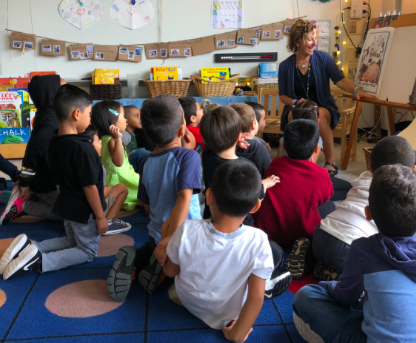
The cheers of the children ring out as we finish reading the last page of Mrs. Wishy Washy. They cannot wait to hear the book again. There is joy, engagement and excitement for every student. Shared reading is a daily part of our literacy instruction in our kindergarten classroom, and one of the most important pieces of our day. I believe that shared reading has a place in all elementary classrooms, as it speaks to the power of learning with an “expert other” through a low risk, enjoyable experience.

Screen Shot 2018-09-25 at 10.09.32 AM

Don Holdaway introduced shared reading, an interactive reading experience, as a way to imitate the typical bedtime story. It’s a joyful time for all students to access a text, experience what it feels like to be a proficient reader and get caught up in the pleasure and engagement of reading. It’s also a time for teachers to support children in building an effective reading process system and model what it looks like when a proficient reader is using his or her system.

Screen Shot 2018-09-25 at 10.09.54 AM

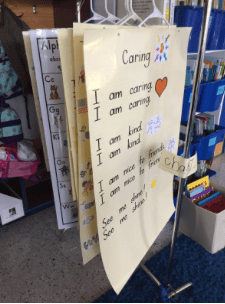
Shared reading texts can be a variety of formats – as long as children can see the text clearly. You can use big books, large charts, or projected text. Big books are still my favorites. I love the excitement that a new big book evokes as it sits on my easel waiting to be read, and I love how children can return to the book over and over again on their own. I also use poems, songs and chants on large, homemade charts. These allow me to customize my shared reading texts for the students in my class, responding to interests and needs.

Enjoyment, reading for meaning and talk is always at the heart of the work we do with every shared reading text. I typically plan for one big book and 2-3 charts each week. We revisit these texts every day for a week. Carefully choosing your texts is important. Highly engaging characters like Mrs. Wishy Washy, high interest topics like monarch butterflies, dinosaurs, Superheroes (or whatever your class is interested in), and charts that have children’s names or connections to shared experiences keep the excitement high as you revisit the texts during the week.

Screen Shot 2018-09-25 at 10.10.00 AM

The following is a list of possible teaching points for shared reading lessons. It is not all-inclusive, nor is it listed in any particular order. These teaching points evolve as the year goes on and as you observe your students and what they might need. This is your opportunity to make the thinking you do as a proficient reader visible to your students – and to encourage them to share the reading work with you. I am always amazed at just how much can be taught in shared reading lessons!

  • Word by word matching
  • Looking at text
  • Where to start reading
  • Left to right (page and sentence)
  • Return sweep
  • Parts of a book: cover, author, illustrator
  • Using illustrations to help comprehension
  • Letter vs. word
  • Noticing punctuation and what it means for the reader
  • Spaces between words
  • Making predictions
  • Rhyming words
  • Vocabulary
  • Using meaning, structure and visual sources of information to solve words and comprehend  (Is that word right? Does that make sense? How do we know? Let’s check it!)
  • Searching and gathering information to support word solving or comprehension
  • Fluency
  • Word solving (Cover words to look at first letter or letters  or use oral cloze: “what might this word be?”)
  • Comprehension strategies (visualizing, questioning, activating schema, inferring, making connections, predicting on the word or text level, monitoring, cross-checking)
  • Nonfiction text features
  • Genre study
  • Character study
  • Readers talk about books

Every shared reading lesson starts with reading the text for enjoyment. There is always the opportunity for talk, initiated by the children, about what they are thinking, noticing or wondering. Much of my teaching is implicit and embedded into the conversation every time we read a text. For example, at the beginning of the year in kindergarten, I am verbalizing book handling and pointing out the cover, the title, the author and dedication. I may talk about how readers think about what they are reading. I then focus explicitly on one or two specific teaching points for each lesson, as we reread and interact with the text, such as word-by-word matching or checking the pictures. I have a general plan for the week, focusing on a different area each day. For example, I might focus on reading the pictures, predicting and word solving on Monday, monitoring and cross-checking Tuesday, print conventions on Wednesday, fluency on Thursday and orchestration on Friday. As always, I follow the children’s lead and adapt as I listen to the conversation and respond to what the class or small group might need.

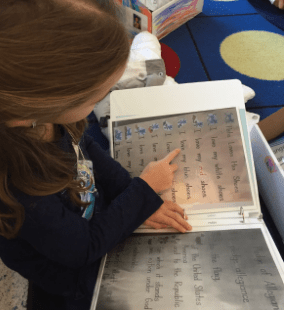
Screen Shot 2018-09-25 at 10.10.09 AMAt the end of the week, our shared reading texts go in the children’s Shared Reading Binder. This is a 3-ring binder where children keep copies of all the poems, songs and mini-books we read each week. I take a photo of the charts and put them in the binder to go home for the weekend. We stress the importance of bringing these binders back to school on Monday, where they are kept in the children’s individual book boxes and are available for children to read independently during our readers’ workshop. The home/school connection is very important, and these binders provide another opportunity for children to share what they are learning at school.

Screen Shot 2018-09-25 at 10.10.14 AM

Revisiting shared reading texts is yet another great teaching and learning opportunity. The large charts and big books are available to children to read throughout the day, in addition to being in their binders. I also have an invitation at the end of every week for children to engage further with the text. Some possibilities might be; a puppet to make, toys to act out the book or art materials available to create art inspired from the text. Children that choose to linger even longer with a text are encouraged to do so. This is a choice during our Explore time after we’ve finished with a shared reading text.

Screen Shot 2018-09-25 at 10.11.12 AM

Shared reading is a part of our daily schedule for whole class and small group lessons that I couldn’t do without. The powerful learning and enjoyment that children have during and beyond shared reading lessons makes this time extremely valuable. There are so many possibilities for all grade levels! How do you see shared reading fitting into your day?

Katie Keier has been teaching and learning with children, as a classroom teacher and literacy specialist, in grades K-8, for twenty-six years. She is currently a kindergarten teacher in an urban, Title I school. She is the co-author of Catching Readers Before They Fall with Pat Johnson, from Stenhouse Publishers. Katie is an adjunct faculty member for American University, a national presenter and conducts staff development workshops and interactive webinars. She is currently in training for Reading Recovery for classroom teachers. You can follow her @bluskyz on Instagram and Twitter, and her kindergarten class @KinderUnicorns .

Being “Inspired” to Hold on to New Learning

Jan Burkins and Kim Yaris, 2019 CCIRA Featured Speakers

We are always looking for ways to push our thinking and outgrow our best ideas and we find attending powerful and inspiring conferences such as CCIRA to be transformational. Connecting with others dedicated to sound literacy education and soaking up the positive energy of the event buoys us, however, sometimes it is a challenge for us to hold onto this energy once we are back home facing long to-do lists or on the road for extended engagements.

If you’re like us, we imagine that you might struggle with this, too, which leaves us all wondering how we can translate the energy and force of an inspiring conference into our daily lives. How do we maintain the momentum and energy of learning alongside so many intelligent, creative, and dedicated educators when the stove just broke, our son has a school project due, and the dog just ate a Lego?

Making substantive, long term change can be challenging but, if you are intentional, you can succeed. We have six strategies to help you (and us) maintain your CCIRA conference energy and focus, once you travel home with plans to apply your most important learning.

  1.  Write about what you learn.

Whether you blog or reflect in a paper journal, writing about what you have learned will bring you clarity. Thinking on paper will help you gain insight into your new learning and show you your next steps along a path to translating this learning into habituated practice.

     2.   Set up a “tripwire”.

Screen Shot 2018-09-18 at 7.07.57 AM


Sometimes the trickiest part of adopting or adapting new ideas is simply remembering to do them. In our busiest moments, our muscle memory kicks in and we tend to do what is automatic for us. Until new practices become habituated, it takes conscious attention to include them in our instruction. So, if you want to remember to make some particular change in your practice, give yourself a “tripwire”–a physical reminder to do something differently. For example, if you want to remember to prompt differently during guided reading, put stickers, sticky notes, or a even tattoo within the range of your vision to remind you to use the new language during the business of guided reading.

    3.   Find a partner.


Whether you are changing your diet, your reading habits, or your instructional practice, a journey of change and growth is always more enjoyable (and successful) with a travel companion. Find someone who is interested in your instructional destination, get connected, and develop a plan together. In today’s digital world, your learning buddy doesn’t even have to live near you–he or she could live anywhere in the world. Make a point during CCIRA to not only discover new ideas, but to find learning collaborators who can share your commitment to change.

    4. Video or audio tape yourself.


This is not a strategy for the faint-of-heart, but once you discover the ways that recording your instruction provides you powerful insights for transforming your work, you will adopt this self-reflecting tool as a regular part of your professional development. It is easier than you think, so no need to overcomplicate things! Your classroom doesn’t have to be perfect; you don’t need a fancy camera, and you don’t need to wait until the schedule is perfect. Your subconscious will always give you a reason (excuse) not to record yourself. Tell your subconscious, “Thank you for sharing; this is going to be fine” and then get your camera out and start rolling. Seriously.

    5.  Find a coach.


Finding a critical friend can elevate your practice in powerful ways! It is common to miss the obvious when we look at ourselves. Oftentimes, substantive change requires a colleague looking at our practice and giving us feedback to help us shift. We challenge you to invite a coach or colleague to watch you implement your new learning and offer you insights into what might make your efforts even more successful.

CCIRA will offer you a wealth of connections and new insights, but these require your commitment to sustaining them. As Cornelius Minor so wisely states, “When you gain new insight, it is really important to change your life to match your new understanding. To choose not to change is to embrace ignorance.” So, once we know the change we want to adopt, we are obligated to ourselves (and to our students) to be intentional about being true to ourselves.

We can’t wait to see you in Colorado to share in your insight and enjoy your energy!

About the Authors

Jan Burkins and Kim Yaris are the writers and thinkers behind Burkins & Yaris—Think Tank for 21st Century Literacy, where their blog and their instructional resources have drawn a national audience and made them thought leaders in the field of literacy instruction.

In their role as literacy consultants, Jan Burkins and Kim Yaris work closely with schools and districts, facilitating staff development, conducting in-class demonstrations, and developing curriculum. Kim Yaris is the founder of Literacy Builders and spends more than 100 days per year consulting in schools. Jan Burkins, founder of Literacyhead,  has authored and co-authored several books, including IRA’s bestseller, Preventing Misguided Reading.

Jan and Kim’s first book together, Reading Wellness (Stenhouse, 2014), shares field-tested, practical lessons designed to meet the rigorous demands of the Common Core while increasing joy in classrooms. With more than 40 combined years of experience in school districts, Jan and Kim’s work is steeped in literacy research but both have the heart of a practitioner.  They truly understand what teachers need to know in order to improve literacy instruction.


Mentor Texts to Engage and Empower Our Students

by Lynne Dorfman and Rose Cappelli

Lynne Dorfman and Rose Cappelli are featured presenters at the 2019 CCIRA Conference on Literacy. 

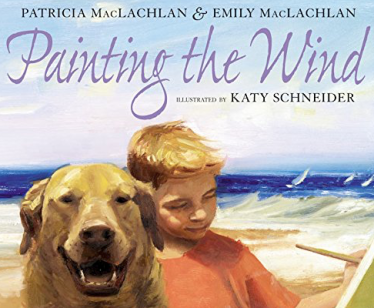
In Painting the Windby Patricia and Emily MacLachlan, we follow a young boy’s journey as he studies the artists who visit his island. Each one is a mentor who teaches the boy some new technique. In our classrooms, mentor texts do the same thing for our student writers. They provide opportunities to take risks and try new things. Mentor texts serve as snapshots into the future, helping students envision the kind of writer they can become. A writer needs to try new things in order to write differently tomorrow than he writes today.

Studying mentor texts with a teacher or partner, or examining a favorite mentor text independently, can move a community of writers forward. When a teacher carefully chooses a set of mentor texts and returns to them frequently, there is a commonality that students bring to discussions, share sessions, and conferences. Mentor texts serve to sustain the writing community. With the help of mentor texts, students build writing muscles to help them tackle longer pieces of writing in new genres and formats.

Sometimes a mentor text can provide a seed of an idea before a student starts to write. Other times, a student may need to return to a mentor text to help him problem solve when he is stuck. He may return to examine a structure, investigate how an author uses dialogue, or discover new strategies to create a satisfying ending. Even after many drafts, a student may go back to a mentor text to study punctuation, perhaps finding new ways to use a comma, colon, or ellipsis in his piece of writing before the final edit.

Screen Shot 2018-09-11 at 7.09.15 AM

Choosing mentor texts for your classroom is a personal matter. We believe you must connect to the books you choose – even love them. When you know your students well, you will understand what they will connect with, as well as what they need to help them move forward as writers. It is important for teachers to know mentor texts inside and out to be able to pull that “just-right” book that inspires a student to say “I can do this, too.” While we find picture books to be extremely useful, it is important to have a balance created by different genres, fiction and nonfiction, and a variety of authors. Occasionally you may decide to use magazine articles, graphic novels, chapter books, poems, or song lyrics as mentor texts. Eventually, we hope students will have the knowledge and confidence to choose their own mentor texts when they need to do so.

At the end of Painting the Wind,the young artist finally reaches his goal, but he needed his mentor to point that out to him.

I look at the painting of Meatball running from the wave, his ears flying.

“You have painted the wind,” I say to the landscape painter.

He points to my painting hung next to his, my painting of bent trees.

“You have, too,” he says.

 We do the same thing as teachers, using mentor texts to help young writers discover more about themselves and empower them to move forward with greater confidence. In other words, mentor texts help students continually reinvent themselves as writers.

MacLachlan, Patricia and Emily MacLachlan. 2006. Painting the Wind. New York: HarperCollins.

Lynn Dorfman and Rose Capelli are literacy consultants working with teachers nationwide to support writing workshop.  Their popular book is now in it’s second edition: Mentor Texts, 2nd edition: Teaching Writing Through Children’s Literature, K-6 Lynn and Rose also authored Nonfiction Mentor Texts:  Teaching Informational Writing Through Children’s Literature, K-8. Follow Lynn and Rose on Twitter.