Scrape the Mud Off and Hike On!

By Katie and Maria Walther, 2024 Conference Presenters

On a recent Denver visit, the four of us drove to Green Mountain for a relaxing hike. We picked that spot to avoid icy trails, but we encountered an unexpected obstacle. Mud. The kind of gloopy mud that sucks your hiking boots down and hangs on. About halfway up the trail we faced a decision: Do we keep plodding forward or turn back? We mustered our collective energy to hike on, stopping every few minutes to scrape off our boots! In the end, the slog was well worth it as we were rewarded with scenic views and sunshine.

February tends to be the time of the school year when mucky mud can occasionally weigh us down. It comes in different forms—from a colleague’s negativity that oozes into conversations to the unrelenting uphill climb of daily classroom life. That’s why having the CCIRA conference in mid-February is perfectly-timed. The conference gives us the opportunity to muster our collective creativity and, together, figure out ways to scrape the mud off. We leave feeling energized and ready to trek alongside our readers until the end of the year. Staying rooted in evidence-based practices of read aloud and supported independent reading, we’ll branch out to offer some ideas that may lighten your step and make the trail ahead a little less sticky.

Lace Read Alouds Together: Play Book Tag

Let’s begin by considering one creative way to enrich your read-aloud experiences while helping students compare and contrast texts. Research confirms that reading aloud books with compelling themes and ideas supports future literacy experiences by building both word and world knowledge (Cervetti & Hiebert, 2018). We can do this by sharing text sets—an evidence-based technique for expanding students’ content knowledge and vocabulary (Wright, 2019). Curating and sharing text sets adds a layer to read alouds by inviting students to uncover the relationships between and among those texts. An engaging way to spark these discussions is by playing “Book Tag.” Here’s how it works:

  • Browse your upcoming curricular plans to target a standard, concept, theme, or content-area topic. 
  • Curate a collection of three to five picture books that bring your selected target to light.
  • Engage in an interactive read-aloud experience for Book 1. Jot down any of your students’ noticings related to the target.
  • Read aloud Book 2. Invite students to tag Book 2 to Book 1 by sharing any connections they find like similar characters, themes, storylines, nonfiction text structures, and so on.
  • Continue in the same fashion for the remaining books.

Here’s a book tag text set to get you started!

Target: I notice how characters react to events and challenges.
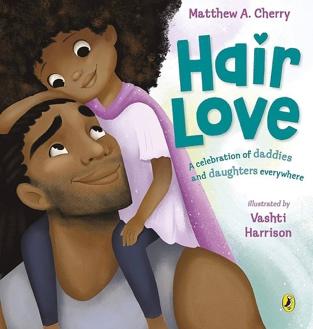
Book 1: Hair Love
(Cherry, 2019
)
Challenge: It’s a special day and Zuri needs a perfect hairstyle.
Book 2:Daddy Dressed Me (Gardner & Gardner, 2023)
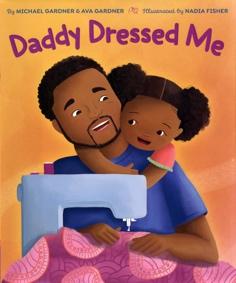
Challenge: Ava has to recite a poem onstage.
Book 3:Sydney’s Big Speech (Newsome, 2024) 
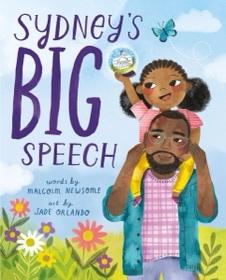
Challenge: Sydney has to give a speech.

If you work with older students who are reading chapter books or novels, consider shifting this experience to “Book Talk Tag.” Begin by having a reader share a quick book talk of a text they’re currently reading or have recently finished. Then, invite one learner at a time to connect a current or recent read to the first book. Encourage readers to continue tagging books as long as time and interest permit. As students notice similarities among texts, they are also discovering books they may want to read in the future.

Explore New Paths: Support Independent Readers

Throughout the first semester, you’ve worked to create a strong community of engaged readers. To explore new paths, take a moment and collaborate with your students to reinvent authentic ways that they can continue to take ownership of their reading journey. The insights you gain can provide a new focus and energy to your daily classroom reading practices. Begin this reflection with your students by following this process: 

  • Brainstorm ways in which readers shape their reading identities and build reading habits throughout school and into adulthood.
  • Use this list as inspiration to experiment with activities that will help students build reading habits in new ways.
  • As you try out these experiences in your classroom, encourage learners to continuously reflect on what they are discovering about themselves as readers and how this might affect their reading lives going forward. Use these questions to guide readers’ reflections:
    • How has your reading identity changed, shifted, or stayed the same throughout this process?
    • Have you learned anything from this experience that you will use in your future reading life?
    • What do you still want to learn about yourself as a reader?

Using this thought process, we brainstormed a few ideas to try in the second semester:

To Help Readers Build This Habit . . .Try This!
We create reading goals based on trends we notice in our reading habits.* Show learners how to use Goodreads or Storygraph to set their own reading goals. (Note: Students will need to be 13+ years old to use these platforms.)
* Provide time for students to interview teachers about how they set their reading goals.
We utilize the local libraries and Little Free Libraries to find books.* Have readers pull up Google Maps to find libraries and Little Free Libraries near school or near where they live.
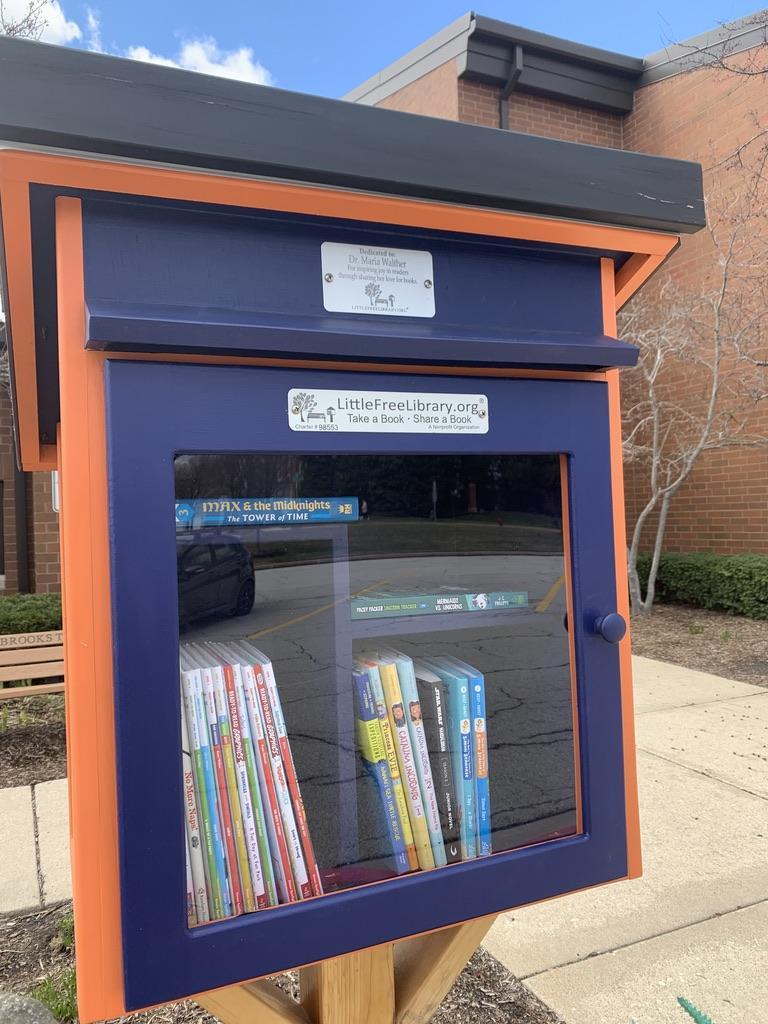
* If your school has a Little Free Library nearby, take learners to visit it.
* Invite librarians from your public library to come talk about the services their library offers.
We try different strategies to get ourselves out of reading slumps.* Brainstorm a list of strategies that students have found successful when faced with a reading slump. Create a bookmark of these strategies for students to take home.
* Offer a variety of short texts like articles, poems, song lyrics, and so on that students might try when they’re in a reading slump. 
We read in a variety of ways (audiobooks, e-readers, reading multiple types of texts at a time).* Create a “Read-o-Rama” week where students are encouraged to try as many different ways to read as possible. Can they listen to an audiobook, use an e-reader, alternate between two types of texts, and so on, all in one week? 
* If you have access to this technology, spend some time re-introducing the different platforms for audiobooks and e-readers in case students forgot about these options.

Use these “Try This!” suggestions as inspiration to explore new paths as you support readers in expanding their reading habits. 

Tuck these strategies in your backpack, aim for the sunshine, and hike on! If you’re looking for more ideas to support your readers, check out our professional resource A Year for the Books or connect with us on Instagram and X @ayear4thebooks. We would love to hear the ways you’ve found to scrape the mud off! 

References

Cervetti, G. N., & Hiebert, E. H. (2018). Knowledge at the center of English language arts instruction. The Reading Teacher, 72(4), 499-507.

Wright, T. S. (2019). The power of interactive read alouds. American Educator, 42(4), 4-8. 

Children’s Books Mentioned

Cherry, M. A. (2019). Hair love. (V. Harrison, Illus.). Kokila/Penguin.

Gardner, M., & Gardner, A. (2023). Daddy dressed me. (N. Fisher, Illus.). Aladdin/Simon & Schuster.

Newsome, M. (2024). Sydney’s big speech. (J. Orlando, Illus.). HarperCollins.

About the Authors

Katie Walther loves to read! In fact, she’s kept track of every book she’s read since fourth grade in Aurora, Illinois. Katie enjoys sharing her passion for reading with students and teachers alike. She taught middle school Language Arts for nine years, and is currently an instructional coach in Aurora, Colorado. You can find her on Instagram and X @ayear4thebooks.

Traveling teacher, author, literacy consultant, and picture book enthusiast, Maria Walther taught first grade for 34 years. Currently, Maria partners with teachers in their classrooms and inspires her colleagues through engaging professional learning experiences. What educators appreciate most about Maria is her focus on joyful, realistic approaches toward classroom instruction. All of Maria’s books are filled with helpful ideas for busy literacy teachers. Learn more about her consulting work and find other resources at mariawalther.com or connect with her on Instagram and X @mariapwalther.


The Top 5 Posts of 2023

By Hollyanna Bates, Blog Facilitator

Since 2019, CCIRA has supported educators through our professional blog. Each year there are favorites that are shared on social media and in professional settings. We are grateful for each post that is written by our network of literacy experts, national speakers and professional book authors and teachers.

Photo courtesy of Ryan Johns via Unsplash.

Each year our blog gains more followers and becomes an even stronger voice for literacy teaching and learning. The posts this year have been some of the best. Below you will find the Top 5 Blog Posts of 2024, listed by order of popularity. We hope you will bookmark this post and come back to these gems when you need inspiration or another lens for reflection.

1.  Reflection is Where the Learning Sticks: A Conversation and Resources for Sustainable Movement-Making in Schools by Kass Minor

2. Making the Case for Slow Reading by Maria Nichols

3. Re-Imagining RtI/MTSS: Putting Students Back at the Center of Instructional Designs by Julie Wright and Mark Bazata

4. Look After Your Twisted Ankles: Professional Development in Troubled Times by Kate and Maggie Roberts

5. Holding on to the Axe by Kylene Beers

Student (dis)engagement

By Dr. Scott McLeod, 2024 Conference Presenter

Hi friends.

Over the past five years, some research buddies and I have visited over 90 innovative schools all across the country (and a few overseas). Fueled by learning equity and college / career readiness concerns, new technologies, and state policy changes, numerous new ‘deeper learning’ schools are emerging that aim to prepare ‘future ready’ graduates. Deeper learning schools are a small but quickly-growing number of institutions, constituting perhaps 1,000 or so schools out of 129,000 total schools in America. Although deeper learning can be defined in numerous ways, most of the schools that we have visited tend to share the following characteristics:

  1. an emphasis on applied creativity, critical thinking, and problem-solving; 
  2. high levels of student agency, control, ownership, voice, and choice; 
  3. opportunities to engage in authentic, real-world work in local and global communities; and 
  4. robust technology infusion. 

A fifth characteristic that deeper learning schools share is that they are incredibly energizing and inspiring places to visit. For example, at any given moment, students in a deeper learning school might be investigating connections between their backyards and inland water ecosystems, creating kinetic art sculptures, learning about the relationship between chocolate-making and forced labor overseas, or building video game controllers for peers with disabilities. Students are thinking deeply, problem-solving collaboratively with peers and outside partners, and making significant impacts in their local communities, while still learning important, foundational course content and academic skills. As they find meaning and relevance in their work, students are excited and engaged learners rather than bored and apathetic.

What I love about the deeper learning schools that we have visited is the sheer energy and enthusiasm that students have around their learning. They’re eager to describe what they’re working on, what they’re mastering, and how they’re positively contributing to the world around them. It’s not just I’m excited to see my friends energy or I can’t wait to do my electives or extracurriculars today energy. It’s delight in the learning itself.

This learning engagement stands in sharp contrast to what we often see in more traditional schools. We’re so worried about ‘learning loss,’ we often engage in practices that feel fairly unproductive: Let’s add more reading and math blocks! Let’s extend the school day or calendar! Let’s create an intervention / remediation period during which students can catch up on the basics! Let’s require kids to attend summer school! Let’s force children to repeat a grade! We don’t actually change how we teach or what we do with students during this additional time. We simply double down on what they didn’t like in the first place.

Post-pandemic, we continue to see a great deal of student boredom and apathy. Some students are opting out physically, and we see many schools struggling with chronic student absenteeism. Other students are opting out mentally: even when they do show up, many of them don’t care much about the work that we ask them to do. The students who are compliant aren’t exactly excited about their learning either. They’re mostly checking off boxes and playing the game of school. If we’re honest with ourselves, we will admit that even our most academically-successful students often struggle to find meaning in the learning tasks that we put before them.

While there are no easy answers here, deeper learning schools show us that that leaning into

  1. greater student ownership of their learning, 
  2. depth of student learning (beyond recall and regurgitation), and 
  3. student meaning-making (not just academic but also real world and applied) 

can be powerful levers for student engagement. And just to be clear: This is not a teacher issue, it’s a systems issue. Together, we could create new visions for student success, establish structures and processes that treat our humans with dignity and respect, and redesign instruction in ways that are more interesting and engaging. We’re not helpless victims, trapped in systems that will forever perpetuate student boredom. We can do better. 

How many of us are tired of constantly cajoling or disciplining students, pleading with or forcing them to do work that they don’t want to do? Me too. 

SCOTT 

Inviting Growth: The Teacher’s Role in Affirming, Acknowledging, Shifting, & ExpandingStudents’ Literate Identities

By Dr. Jennifer Scoggin & Hannah Schneewind, 2024 Conference Presenters

We spend a tremendous amount of time discussing, analyzing and, in all honesty, worrying about students’ reading growth.  And yet, the ways in which many of us are mandated to measure and report growth do not capture the full picture of who our readers are or their reading journeys.  

Last June, Hannah spent time with Damian, an exuberant first grader, as he joyfully read his book aloud.  Damian proudly read every word, laughed about the story, closed the book, and immediately picked up another, smiling the whole time. “Want to hear me read some more?” he asked.  Damian eagerly displayed all the books in his book bag, sharing how he selected each one and commenting on his favorite parts of each.

Later, his teacher confided in Hannah: “I am worried that no one will see his growth. No one will know how hard he worked to become a confident reader who can decode words on his own.  They won’t see how he lit up when he discovered an author he loves or how much he participates in class conversations now.  They will just look at his independent reading level at the end of the year and see only that he is a struggling reader, that he is still below grade level.”

For Damian, and so many students, reading growth encompasses much more than what traditional assessments measure.  Reading growth can mean reading with increased confidence, finding one’s own purpose for reading, actually wanting to read, or being able to read for long periods of time.  Reading growth can also mean being moved to take action in response to reading, creating text sets based on interests, making book recommendations, and seeing texts as an essential part of life. Reading growth can, and should, encompass both growth in reading and growth as a reader.

Does this story resonate with you? As we advocate for a more comprehensive definition of reading growth, we consider three essential questions:

  • What is reading identity?
  • Why does reading identity matter?
  • How can teachers positively impact students’ evolving reading identity?

What is reading identity? 

Reading identity is complex, nuanced, and dynamic.  It includes the many aspects that make up a student’s understanding of themselves as a literate being. How students feel about reading, what, where, when and with whom they like to read, whether they are engaged as they read, whether they see reading as purposeful or not, their understanding of what it means to be a ‘good’ reader: all of these (and more!)  factor into reading identity.

There is no one right way to be a reader.  Based on a wide swath of research and conversations with hundreds of students, we define reading identity as consisting of five aspects: attitude & attribution, self-efficacy, habits, book choice, and process (Scoggin & Schneewind 2021).  Engagement and motivation shape and are shaped by reading identity; they are threads that weave through all aspects of identity. For more about our conception of reading identity, please visit our earlier CCIRA blog post.   

Students of all ages enter our classrooms already living literate lives. When we commit to a broader view on reading growth, one of our roles is to learn about students as readers and to give students opportunities to learn about themselves. Throughout the year, we can engage in a variety of practices with this goal in mind, such as observing while students pick books, listening in during independent reading, conducting conferences, facilitating class conversations, providing students with language to describe themselves, and offering them opportunities to reflect on their growth. All of this is real data.

Why does reading identity matter?

To teach effectively and responsively, we need to focus both on what we are teaching (the act of reading) and on who is in the classroom (the reader), not just follow a prescribed list of skills and strategies. The research on the positive impact of instruction in the areas of fluency, decoding, phonemic awareness, vocabulary, and comprehension (Young, Paige & Rasinski, 2022) is well established; however, if we ignore the affective influences on reading development, we limit our ability to reach all readers. We literally get in the way of student achievement.  

Here is a sampling of the research on these affective influences and reading identity:

  • Attribution, how students feel and the stories they tell about themselves, impacts reading achievement (Frijter et al, 2018).  
  • Self-efficacy refers to our belief in our capacity to set goals and be successful in reaching those goals (Bandura 1986). Readers with high self-efficacy approach texts with confidence and are ready to take on challenges, whereas readers with low self-efficacy tend to get frustrated which in turn, makes them less confident. 
  • Motivation and engagement strongly influence reading development and achievement (Afflerbach, 2022, Fisher, Frey, and Quaglia, 2018). 
  • Duke (2021) warns that we ignore the scientific research on motivation for reading at our peril. 

We need to attend to both reading and reader for all students to thrive.

How can teachers positively impact students’ evolving reading identities?

When we commit to a more expansive definition of reading growth, our teaching includes uncovering students’ reading identities as well as intentionally supporting and nurturing students’ evolving sense of self as readers.  For students who see themselves positively as readers, we can encourage them to set their own goals, challenge themselves to read differently, and tell themselves stories with new possibilities. For students who feel negatively about themselves as readers, we cannot make a student change or erase past reading traumas; however, we can design experiences for students that allows students to feel joyful and confident. This includes explicit instruction in areas such as decoding and fluency and includes explicit instruction around areas such as  attribution and self-efficacy. We can support them to tell a different, asset-minded story about themselves as readers.

One way to put this into practice is to incorporate the following four teaching moves into our regular feedback practices: affirming, acknowledging, shifting, and expanding.  The chart below explains this work and its possibilities.

A Summary of Teacher Moves to Respond to Reading Identity

Teacher MovesWhat it does…What it might sound like…
AffirmHighlight students’ strengths“You are a very confident reader who enjoys a variety of genres.”
Acknowledge Validate students’ range of emotions about themselves as readers and about reading “Right now, you don’t see yourself as a reader.  Would you be open to working together to change that?”
ExpandBuilds on student strengths with explicit instruction“You already focus on learning about characters. Now, let’s add on that and think about theme. “
Shift Designs success experiences with explicit instruction“Did you notice what you just did when you got to that multisyllabic word? A few weeks ago, you might have stopped reading altogether.  Today, you tried a few strategies and figured it out.  You did that.” 

The definition of reading growth does not have to be limited to mandated assessments.  Inside your classroom, you can choose the feedback you give to students about their reading and about being a reader.  You can celebrate growth in all its forms. As we enter the second half of the school year, we invite you to embrace and enact a more expansive definition of reading growth.  How can you support students to tell a more expansive story about themselves as readers, inviting them to acknowledge their past experiences while creating a hopeful path for their reading future? How can you shift to teaching readers as well as teaching reading? How can you see growth for all readers?

Citations

Afflerbach, P. (2022). Teaching Readers (Not Reading): Moving beyond skills and strategies to reader-focused instruction. The Guilford Press, New York, NY.

Duke, N.K., Ward, A.E., & Pearson, P.D. (2021).  The Science of Reading Comprehension Instruction. The ReadingTeacher, 74(6), 663–672. https://doi.org/10.1002/trtr.1993

Frijters, J.C.,  Tsujimoto, K.C.,  Boada, R.,  Gottwald, S.,  Hill, D.,  Jacobson, L.A.,  Lovett, M.W.,  Mark Mahone, E., Willcutt, E.G., Wolf, M.,  Bosson-Heenan, J., &  Gruen, J.R. (2018). Reading-Related Causal Attributions for Success and Failure: Dynamic Links With Reading Skill. Reading Research Quarterly, 53(1), 127–148. doi:10.1002/rrq.189

Scoggin, J. and Schneewind, H. (2021).  Trusting readers: Powerful practices for independent reading.  Heinemann, Portsmouth, NH.

Young, C., Paige, D. & Raskinski, T.V. (2022). Artfully teaching the science of reading. Routledge, New York: NY.

Holding on to the Axe

By Kylene Beers, 2024 Conference Presenter

Another Zoom meeting with yet another teacher about the censorship problems she is facing in her district left me both angry and sad. This teacher faced disciplinary steps from her principal after she let her seventh-grade students check out books from her in-class library of over six-hundred books without first letting the media specialist approve all the books. “It would be February before she got to my class. My kids need to be reading now. And so, yes, I told them they could check out books. I also told them to discuss anything they were reading with their parents and if their parents asked them not to read that book, then they needed to return it to my class library and choose a different book.”

I knew where this conversation was headed as she continued. “So, one kid went home, and her mom saw she was reading Hurricane Child (Kheryn Callender, 2018). The main character is a twelve-year-old girl who realizes that she has romantic feelings for another girl. It’s really more about the girl coming to terms with her mom who has left the family than it is about her discovering she is gay. But this mom called the principal and now I’m in trouble because one parent said that didn’t think kids in seventh grade should read this book because the main character is gay. She said she doesn’t want her daughter to think its ok to be gay and there is no reason for her to read about any gay people because in their family they don’t believe in being gay.” 

Photo Courtesy of
Quaidian Wanderer via Unsplash

The teacher was crying. “What does that even mean that her family doesn’t believe in being gay? What does it matter whether this one mom wants to believe in being gay or not? And why does this one parent get to decide what books I have in my classroom? And why does she get to decide what books any other kid other than her own can read? She told my principal that I’m not there to do anything more than teach her kid about the things she needs to know to pass the STAAR test and nothing else. I’m going to quit at the end of this year.”

We continued our conversation though I am quite sure I had little to offer. Before she ended the call, I said, “Don’t quit. Kids need you.” She nodded slowly, sighed, and signed off. 

***

I have written in other places that I believe we are fast moving toward a curriculum of irrelevancy. As a nation we seem to be bowing to the ideological and political desires of those wanting more power for some and less for others. This small but loud group wants to impose their values and beliefs on others. In response, in some places, some school districts have mandated that certain books be removed from shelves and teachers must be careful to avoid any conversations of controversial subjects. 

We have all watched as more and more books are challenged – in classrooms, in school libraries, and in public libraries. I’m from Texas and we’re leading the nation on book challenges. In 2022, 2,349 unique titles faced challenges by 93 people. While the number of challenges is unprecedented, what is also new is that until recently one parent might challenge one book to make sure one child – that parent’s child – didn’t read the book. Now we see individuals challenging large numbers of books with the insistence that no child read the books. I am writing this for a Colorado publication, so let’s look at Colorado challenges. In 2022, the American Library Association reported 56 book challenges in Colorado. In 2023, though, this state saw an increase of challenges by 143%. 
While many of the books challenged across the nation would more often be found in middle and high school libraries, in October 2023 Scholastic Book Fairs came under intense criticism as they segregated some books into a separate case that elementary school librarians had to opt in to receive for their local book fair. This special case included books about Ruby Bridges, John Lewis, and Supreme Court Justice Ketanji Brown Jackson. Scholastic initially explained that they segregated these books into an “opt-in” case to protect teachers and school librarians who might be punished if parents objected to these books; later, they retracted that and apologized for segregating the books and promised to stop this practice in January of 2024. This segregation of books by a publisher represents a more troublesome type of censorship, one that pretends to be done to support teachers while removing diverse voices and perspectives. Now the parent censors are not needed as a publisher segregates some books from others. 

This selective segregating of books, suppression of topics, and restriction of certain authors serves as a concerning indication of a broader threat to intellectual thought. Such actions not only stifle the rich exchange of ideas but also hamper the development of a highly literate citizenry, a prerequisite for a thriving democracy. Diverse voices and ideas are the lifeblood of a thriving democracy as they challenge assumptions, foster empathy, and encourage dialogue. But diverse voices are harder to hear when they are segregated into certain areas or removed altogether. 

Finding ways to bridge the deep divisions that currently characterize our political and culture landscape is an ongoing challenge that demands the

collective efforts of educators, policymakers, and society as a whole. If we can bridge this divide, then educators have the opportunity to instill in students the skill of critical thinking, the value of an empathetic mind, and the benefits of open dialogue. By teaching students to respect and engage with differences while seeking common ground, teachers help create a stronger democracy. But if we do not find the stamina to stand against censorship, then ultimately, we will offer our students a curriculum of irrelevance. 

Such a curriculum might prepare students to pass state tests, but little else. If we make instruction irrelevant to students’ emotional and intellectual lives, then, it is true, no one will call the principal with complaints. If we offer books that do not challenge long-held assumptions, then we will not face the censor’s challenges. We can teach about events that led to our involvement in World War II but ignore what we did to Japanese Americans. We can explain important dates and events in the Civil Rights Movement and fail to mention what happened to the Little Rock Nine. We can teach students the sounds that letters make and overlook that harsh punishment that enslaved people faced when they tried to learn how those letters and sounds worked together. We can teach grammar and definitions of poetic terms and the difference in internal and external conflict without ever touching on any of the internal and external conflicts our students face daily. Or, we can remember what Franz Kafka once wrote:

I think we ought to read only the kind of books that wound and stab us. If the book we’re reading doesn’t wake us up with a blow on the head, what are we reading it for? So that it will make us happy, as you write? Good Lord, we would be happy precisely if we had no books, and the kind of books that make us happy are the kind we could write ourselves if we had to. But we need the books that affect us like a disaster, that grieve us deeply, like the death of someone we loved more than ourselves, like being banished into forests far from everyone, like a suicide. A book must be the axe for the frozen sea inside us. That is my belief. (1958/1977, 16)

Books ought to make us feel something. Sometimes that feeling might be regret; other times it could be horror; other times it is courage; and even other times it is relief at finding someone who looks or thinks or feels like we do. Yes, a book must be the axe for the frozen sea inside us. So, dear teachers, never give in to the demands of irrelevancy. Somehow, find the stamina and courage to be brave. Hold on to the knowledge that your hard work is the good work; the best work; the needed work. And don’t quit. Our nation’s students need you. 

Reference
Kafka, Franz. 1958/1977. Letters to Friends, Family, and Editors. New York: Schocken Books.

Kylene Beers, Ed.D., is a former middle school teacher who has turned her commitment to adolescent literacy and struggling readers into the major focus of her research, writing, speaking, and teaching. She is author of the best-selling When Kids Can’t Read/What Teachers Can Do, co-editor (with Bob Probst and Linda Rief) of Adolescent Literacy: Turning Promise into Practice, and co-author (with Bob Probst) of Notice and Note: Strategies for Close Reading and Reading Nonfiction, Notice & Note Stances, Signposts, and Strategies all published by Heinemann. She taught in the College of Education at the University of Houston, served as Senior Reading Researcher at the Comer School Development Program at Yale University, and most recently acted as the Senior Reading Advisor to Secondary Schools for the Reading and Writing Project at Teachers College.

Kylene has published numerous articles in state and national journals, served as editor of the national literacy journal, Voices from the Middle, and was the 2008-2009 President of the National Council of Teachers of English. She is an invited speaker at state, national, and international conferences and works with teachers in elementary, middle, and high schools across the US. Kylene has served as a consultant to the National Governor’s Association and was the 2011 recipient of the Conference on English Leadership outstanding leader award.

Kylene is now a consultant to schools, nationally and internationally, focusing on literacy improvement with her colleague and co-author, Bob Probst.