AI is evolving quickly, and we’re aware of its growing role in education. While we’re not against teachers using AI to enhance instruction, we want to be careful about where and how teachers use it, what they gain when they do, and what they give up.
If you’ve spent time working with AI chatbots, you may have discovered that they can generate any kind of text quickly. Ask one, “Create a personal narrative about a day at the beach,” or, “Write a literary essay about why the character of Harry Potter is brave,” and within seconds, almost like magic, one appears on your computer screen, fully formed. You can even ask chatbots to write texts that include particular craft moves, such as transitions in essays or dialogue in realistic fiction.
It would seem that chatbots can help address the problem that teachers face of gathering mentor texts for the writing units of study. Right? After all, it takes time to gather mentor texts, time that busy teachers seem to have less and less of these days. And some genres we teach children are harder to find than others.
However, for several reasons, we have strong reservations about using AI to generate mentor texts.
First, think about the meaning of the term, “mentor.” A mentor is a more experienced person who helps us become better at an important skill. When we teach with mentor texts in classrooms, we name the author of the text as we teach with it. (“Let’s take a look at how Jacqueline Woodson wrote the lead to her story, Sweet Sweet Memory.) When possible, we share information about an author, to help students understand why they wrote the text (e.g. Jaqueline Woodson wrote Sweet, Sweet Memory in memory of her grandfather, Ganaar, who was a gardener.) We do this to demystify writing for children, to help them understand that real people—like Jacqueline Woodson–write texts, which means that they can do so themselves. And we do this to support children’s identities as writers, which means they need to see themselves doing the same things that published authors do.
However, if we were to teach with an AI generated mentor text, there is no person behind the text! We can’t name the author, because there is none. We can’t share details about the author’s life that explain why they wrote the text, because there aren’t any. We can’t make the point that students can be writers like the author, because there is no author and, in fact, the text was written by an AI algorithm.
Second, we teach with mentor texts because we want students to learn to use the same craft techniques the authors use, for similar reasons.
If we were to teach with AI generated mentor texts, it would be difficult to authentically study the craft moves that these texts contain. Not because AI generated mentor texts don’t contain craft moves—the AI chatbot will search its memory for similar texts, and create ones with commonly used craft techniques, or we can tell the AI chatbot to write a text using specific craft techniques that we want to teach. The problem we would have is with the important discussion about why these craft techniques are used in the mentor text. When we study a craft technique in a mentor text, we ask students, “Why do we think the author used this craft technique? What effect did they think this craft technique would have on their readers?”
For example, we might ask students, “In Sweet, Sweet Memory,” why do you think Jacqueline Woodson, used the technique of the “description list” to describe the setting of the story (“Somewhere an owl is hoo-hooing soft and loud. Under the porch there are field mice moving around. Maybe a frog or two.”) In response to this question, students can genuinely speculate that that Woodson used this description list to create a beautiful image of the setting in her readers’ mind.
We can’t have this conversation about an AI generated mentor text! That’s because the text was generated at our command, not because a real person wrote it. We can’t speculate about why the “author” used a craft technique because there was no thinking mind behind the text, and because the AI chatbot didn’t use craft techniques to effect readers, since AI chatboxes aren’t people who write for audiences!
Third, if we ask an AI chatbox to create mentor texts that contain certain craft moves, then the texts will reflect only what we know already know about the genre. If we rely solely on AI to generate mentor texts, then we are missing the opportunity to learn more about the genre that we would have if we were to look for authentic examples where they are found in the world. This is especially important for new teachers when they are building their knowledge base about writing.
For example, let’s say we ask an AI chatbox to generate several arguments that each have a claim, three reasons, a counterargument, and a conclusion, because that’s how we think arguments usually go. If instead we were to look for arguments in the world, we would discover that some have two reasons, some four (note that this argument has five!). And in some arguments, the author starts their lead with a counterargument, or writes a counterargument before a reason. By studying real examples of argument, we would not only deepen our knowledge of the genre, but we are then able to show students that there are many ways to write an argument—and that as writers, they need to choose the one they think will best help them argue their point.
Fourth, one of the powerful ways we teach with mentor texts is to point out the ways that students are becoming like the authors of the texts. For example, when we confer with mentor texts, both of us often say to students things like, “Wow, I see that you’re using description lists in your story, just like Jacqueline Woodson does in Sweet Sweet Memory!” This is powerful feedback for students. When we compare them to mentor authors who they love and admire, we help build their confidence as writers.
If we were to teach with AI chatbot generated mentor texts, how can we have this kind of conversation with students? What would we say? “Wow, I see that you’re writing just like the algorithm in the AI chatbot?” In what way would this “compliment” have the powerful effect that comparing students to real, live authors that students admire has?
Finally, it’s important to consider the important role that mentor texts play in increasing student engagement in writing. When we teach with mentor texts, we try to select mentor authors who have things in common with the students we’re teaching, and who write about topics that reflect the identities and interests of our students. As Rudine Sims Bishop has written, texts should be “mirrors” for children that reflect their various identifies, their lives, and their interests, so that they realize that these identities, lives and interests are worth writing about.
We are at a loss when we think about engagement and AI generated mentor texts. Since there is no person behind an AI generated text, a student cannot be inspired by the author of the texts in the ways they can be inspired by reading a text written by authors like Jacqueline Woodson. After the careful and important work done over the last decade to include mentor texts in our teaching that are representative of the children in a particular classroom, using AI-generated texts seems like a step backwards to us.
We understand that teachers are pressed for time, and that using AI-generated mentor texts can help mitigate the time crunch. However, while it does take some time to find high quality mentor texts in the world, there are excellent sources for mentor texts that are readily available for teachers, such as their classroom or school library, or children’s magazines such as Cricket, Highlights, or Scholastic Storyworks. And we find that when teachers work together to find high-quality mentor texts, the process takes less time. (We describe ways that you can do this collaboratively in our book, How to Become a Better Writing Teacher.)
We also understand that some genres are hard to find. For example, where can you find high-quality literary essay for third graders? We suggest that in these cases, it’s better for you and your colleagues to write your own mentor texts, so that students are studying texts written by real people (you and your colleagues) who can authentically talk about what they did to write them, and why.
And we also think that if a genre is hard to find, this may suggest you should consider that it not be a genre that you study with your students. For example, literary essay is almost never written for elementary age children as the audience. Since children rarely see it, then why are we studying it in the first place?
Works Cited
Bishop, Rudine Sims. 1990. “Mirrors, Windows and Sliding Glass Doors.”Perspectives: Vol. 6, No. 3, Summer Issue.
Woodson, Jacqueline. 2007. Sweet, Sweet Memory. Jump At the Sun: New York City.
Carl Anderson and Matt Glover are teacher educators who work with teachers around the world. They are co-authors of the new book, How to Become a Better Writing Teacher.
I was teaching the names and ignoring the songs – Robin Wall Kimmerer
When my son was young, we took long walks down the street searching for small treasures on the ground. Our treasures were often a blade of grass, a pebble, or a seedling. It took half an hour to walk one block as he stopped to pick up a rock, gaze at a ladybug, stoop down to touch a seed or sometimes, when I wasn’t looking, stuff a not-too-special cigarette butt into his pocket. As we meandered down the sidewalk, he asked a lot of questions: Why does a ladybug have spots? How does a tree grow from a seed? He might lift up a leaf and study it closely or watch a worm wriggle across the sidewalk. My son was doing what all young children do: they see the extraordinary in the ordinary; they ask a lot of questions about the world; and they notice minute details in the everyday.
I heard the author, Robin Wall Kimmerer, who is also the founding director of the Center for Native Peoples and the Environment, in an interview talk about how part of the scientific process is to name things — for example, to label a specific type of plant (Bayberry: Myrica) or bird (Cedar Wax Wing: Bombycilla cedrorum). But she warns that knowing the scientific name can often shut down inquiry: “We sort of say, Well, we know it now.” She says her evolution as a scientist involved embracing Indigenous ways of knowing: “I was teaching the names and ignoring the songs.”
Kimmerer’s words remind me of a children’s book I read years ago called The Other Way to Listen by Byrd Baylor. It describes a young boy who learns from an elderly teacher how to listen to the sounds and songs of the natural world. This wise man teaches the boy to hear a wildflower seed bursting open, rocks murmuring and hills singing. He tells the boy that it takes a lot of practice and “you can’t be in a hurry.”
Both Robin Wall Kimmerer and Byrd Baylor’s advice resonate for me as a writer as well. When we write, we can look at an ocean and write “Atlantic Ocean” and even describe it with a few details: blue water, waves crashing, sandy beach. But hearing (or imagining) the waves’ roar, smelling the salty air, seeing hundreds of shells scattered like stars on the sand, and closing our eyes and hearing what the ocean is telling us is a different kind of knowing; it’s about learning to listen and understanding the heart or poetry of something.
In my new edition of Awakening the Heart: Teaching Poetry I describe a project I did during a month-long residency at an International school in Bangkok. In conjunction with the school’s theme of botany, they aspired to rewild a vacant lot next door in the midst of a bustling cityscape of skyscrapers and non-stop traffic. As a visiting writer, my job was to guide young learners in exploring the “poetry” of plants, if you will.
In preparation for rewilding the vacant lot and for writing, we first imagined seeds as sentient and wondered what they might feel as they lay nestled in the dark ground waiting to sprout. We also pretended we were seeds, crouching on the floor, then slowly rising upwards toward the light. Children observed and sketched seeds, and we had conversations about what a seeds’ journey might be like both scientifically and poetically. Then they wrote messages to the seeds directly on heart-shaped wildflower seeded paper that they would then plant in the vacant lot and, hopefully, someday flower and flourish: “Seed, I hope you have a good life.” And, “We hope you don’t get eaten by bugs and other animals.”
We imagined the children’s words mingling with the seeds and the dirt, singing songs of hope, strength, and courage to help make this small bare patch a verdant and gorgeous place.
This is what a poet’s job is, and also what children do naturally when given the opportunity: to look at the world with wonder and to feel and take in the aliveness and beauty of the world. This gift of paying close attention, especially to the small things, is often a portal to wonder, to learning, to being stewards of our planet and also, to being a poet.
Georgia Heard received 2023 Excellence in Poetry for Children Award which honors a living American poet for their aggregate work for children ages 3-13. She is the author of 21 books and numerous professional books. Her newest professional book is Awakening the Heart (second edition) and her new children’s picture book is Welcome to the Wonder House (coauthored with Rebecca Kai Dotlich). Learn more about Georgia on her website: Georgiaheard.com or on social Instagram and X @georgiaheard1.
Discussions of evidence-based reading instruction, what many refer to as “the science of reading,” are everywhere. In fact, thirty-seven states and the District of Columbia have passed legislation that requires schools to use research-based resources to teach reading in elementary school. The science of reading refers to a multidisciplinary body of research that examines how kids learn to read and identifies what works in literacy instruction. However, there isn’t a central repository for the research and no list of which studies are and are not included. And of course, researchers continue to add to the body of research as new studies uncover new findings.
I’m a big believer in using research to inform how we teach reading. As an author and literacy consultant, I have always used research to better understand the practices that are most likely to impact the most students. And I think we need to look at all the research, not just those studies that support a certain perspective. For example, in my newest book, Teaching Reading Across the Day, I cite and interpret more than 300 studies, meta-analyses, and papers. Research about phonics and word reading, knowledge and vocabulary development, strategy instruction, fluency, comprehension, verbal reasoning, executive function skills, language structure, engagement and motivation, and theory of mind are all key to developing proficient readers. I also lean on research about pedagogy, explicit instruction, and inquiry, as well as how to teach responsively – offering feedback and guiding students.
But here’s the thing about research: controlled studies, meta-analyses, brain research, reader models, etc. are all a great starting place. However, for the research to have an impact on student learning, teachers need to understand how best to implement findings in the classroom, and how to accommodate the inevitable variability as individual student needs come into play. So, while I read research and talk to researchers for my podcast To the Classroom, I also spend time with teachers in classrooms around the country as a guest teacher, coach, and collaborator. I model lessons, and together we problem-solve, test, and refine ideas, using the research, but also relying on our teaching experience and expertise, with the goal of meeting every student’s need. I was honored when Rachael Gabriel, a professor of Literacy Education at the University of Connecticut called me a faithful translator of reading research, since that’s exactly what I aim to be! When I share practices, strategies, or ideas in my books or workshops they are not only grounded in decades of research, they are also classroom-tested.
One of the problems my team of consultants and I have been trying to solve lately is how to ensure teaching is explicit, engaging, well-planned and well-paced, while keeping planning and preparation time reasonable. In the schools we support, we find that teachers are working hard to address a wide range of student needs with grade level texts in ELA and across content areas, while also incorporating science of reading-aligned practices, sometimes using a new curriculum. Leaning on the research around explicit engaging instruction, we’ve come to rely on nine lesson types (read aloud, phonics and spelling, vocabulary, focus, shared reading, close reading, guided inquiry, reader’s theater, and conversation) that ELA and content teachers can depend on. If you know the pacing, structure, teaching moves, and predictable ways you’ll need to respond for each lesson type, you spend less time planning, which keeps your focus – and your students’ – on the content you’re teaching.
And of course, it’s not just the science of teaching that’s important – the art of teaching is as well. The creativity you bring to your teaching, together with the hundreds of decisions you make daily to respond to the needs of the students in front of you often makes the difference as to whether a student learns or not. With the all the standards and content you must cover, responsive teaching is critical. No matter what curriculum you are using, it’s you and your responsiveness to student needs that makes the greatest impact on student learning.
Responsive teaching starts with a small set of predictable lesson structures and a great lesson plan. The beauty of relying on nine lesson structures is that you can use them to teach any text in any subject, although of course certain lesson structures are better suited to certain goals and content. Once you are familiar with the structure, you’ll save planning time as the steps become second nature and teaching within a structure will give you more flexibility to innovate and respond during the lesson.
Though responsiveness to students can feel like it’s all in-the-moment decision making, it’s possible to anticipate the prompting, support, redirection, or affirmation students might need as you guide them toward lesson objectives. This might include direct instruction when introducing a new vocabulary word. Or perhaps orchestrating a turn-and-talk to get students engaged and to assess their understanding. Or maybe modeling a particular reading strategy so students can see the steps you follow to determine key points or understand character motivation.
When I teach a lesson, I’m always looking at and listening to the students, and getting feedback from them. I watch their facial expressions. I notice their body language. I tune in to nuances in their inflection. I attend to what they are not saying as well as what they are saying. If the students have bright faces and are eagerly following what I say, I can continue with the plan. Maybe they are further ahead than I anticipated, and I can pick up my pace or skip a part of the lesson. If I’m looking out at a sea of puzzled expressions and students are quiet, I may need to back up, slow down, and offer an extra explanation or demonstration. These pivots and adaptations not only impact student engagement during the lesson, they determine whether students learn or not.
So, it’s about the science and the art – honoring the decades of research on reading and the collective experience of teachers. Research that doesn’t recognize the importance of the teacher doesn’t lead to a successful outcome. And teachers who don’t tap into and apply evidence-based reading instruction don’t reach as many students. It’s the marriage between the science and art of teaching that helps students become proficient readers.
Jennifer Serravallo is a NYT bestselling author, award-winning educator, literacy consultant, frequent invited speaker at state and national conferences, and former member of the Parents Magazine editorial board. Learn more about her and her work, including her podcast To the Classroom, at www.JenniferSerravallo.com. Her newest book, Teaching Reading Across the Day, is available now from Corwin Literacy.
As a special offer for CCIRA, Corwin is offering a 25% discount and free shipping for Teaching Reading Across the Day. Simply use the code SERRAVALLO at check out.
John Schu talks with Patrick Allen about readers, writers, and his newest book, Louder Than Hunger.
Given your vast experience as an advocate for reading, what is one memorable connection you’ve made with young readers?
John Schu: I LOVE celebrating stories at CCIRA’s Annual Conference. I always tell people about what a WONDERFUL and INSPIRING conference it is.
I’m grateful you’re chatting with me today.
Oh, I’ve made so many connections with young readers and writers.
Mario is the first person who comes to mind.
I’ll never forget when he approached me, a bit shy and nervous. He seemed unsure and kept rotating himself to the end of the line, not wanting to share in front of the others. He thanked me for talking about The One and Only Ivan and for sharing that it made me cry. “I read it last year,” he said. “It made me cry a lot.” We talked about how sadness in books can help us better deal with sadness in our own lives and better prepare us for difficult moments in life. “I know sadness,” he said. “My sister died last year. Books helped me. Ivan helped me.” My heart was full when I left that meeting. Full of grief for his loss, but also full from the connection our hearts made through sharing Ivan’s experience—and through that, our own. When we create conditions where children are safe to experience life through the lens of characters and their struggles and successes, books can be a bridge to connect and restore us. Stories have the power to strengthen and heal hearts. A teacher-librarian put The One and Only Ivan in Mario’s hands, but probably had no idea, when they did so, that they were also tattooing love and light and laughter and hope on his heart. Or maybe they did, and that’s exactly why they did it. A book often walks into our lives when we need it the most.
Your picture book collaborations with Lauren Castillo and Veronica Miller Jamison are superb… What surprises you about their interpretations of your words in This is a School and This is a Story?
John Schu: I’m so lucky Lauren Castillo and Veronica Miller Jamison said yes to illustrating my poems. That they said yes to illustrating my very spare and lyrical odes to story and libraries and connection.
Both times, I was surprised and delighted and honored by how they interpreted my words.
Both times, I was reminded of how school and books can inspire us, connect us, and make us more compassionate. I couldn’t wait to share both picture books with readers of all ages.
You’ve joined the ranks of children’s authors. Who inspires you as a writer?
John Schu: That’s very kind of you to say. So many children’s book creators inspire me. I’m going to limit my list to ten creators.
Katherine Applegate
Kate DiCamillo
Margarita Engle
Erin Entrada Kelly
Deborah Freedman
Meg Medina
Dav Pilkey
Jason Reynolds
Jasmine Warga
Jacqueline Woodson
Tell us about your latest book Louder Than Hunger. First of all, talk to us about your writing process. Then, tell us what you hope readers will discover about themselves in the pages.
John Schu: Louder Than Hunger is a novel-in-verse that tells Jake Stacey’s story. Jake is battling a very loud voice inside his head. A voice that tells him that he doesn’t deserve to take up space. A voice that tells him that he doesn’t deserve food and love.
While Jake doesn’t usually feel comfortable taking up space in his everyday life, he’s very comfortable taking up a lot of space on the page. He loves playing around with the placement of words. He loves poetry.
I knew right away Louder Than Hunger needed to be told in verse. I cannot imagine the story told in any other way. The white space helped me write the story. The line breaks helped Jake find his voice.
I hope readers are inspired to listen to music from the ‘80s and ‘90s.
I hope they’re inspired to watch The Golden Girls, Family Matters, and Fraggle Rock.
Most importantly, I hope the story helps them ask for help if they are struggling with anorexia nervosa. I hope it helps them feel less alone.
John, you inspire and instill hope in educators. You love readers and you love books. What do you hope your legacy will be?
John Schu: Thank you! I love this question!
I’m going to answer your question by sharing what I hope people say at my memorial.
John Schu helped spread joy through story.
He made us laugh.
He made us cry.
He listened.
He gave away a lot of notebooks.
He inspired us to support libraries and librarians, see many Broadway musicals, and go on joywalks.
He cared.
John Schu has made a career out of advocating for the people and things he cares about most: kids, books, and the people that connect them. John is a children’s book author, a part-time lecturer at Rutgers University, and the children’s librarian for Bookelicious. His greatest joy is sharing his love of reading with countless educators and students around the world.
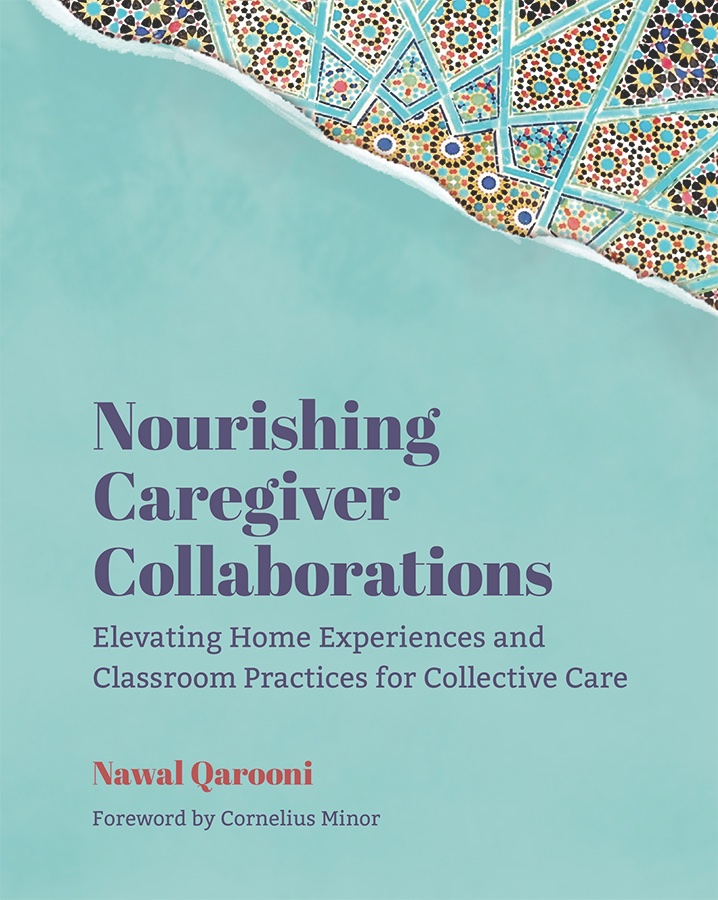
This post was written by Nawal Qarooni, an adapted excerpt from Nourishing Caregiver Collaborations: Exalting Home Experiences and Classroom Practices for Collective Care (Stenhouse/Routledge December 2023) by Nawal Qarooni.
When I was in second grade, I used to walk home with my dad a few short blocks from Mt. Lebanon Elementary School outside of Pittsburgh, Pennsylvania. I remember a chalk-pink backpack slung on one shoulder with a lined piece of paper in my hand, perforated edges ripped wrong, my head down as my father berated me for spelling babies wrong on a ten-word spelling test. This was in 1989.
“Why would you write babbies?” he asked, shaking his head, seeming truly baffled.
He continued: “That says bab-ees . . . and your handwriting is sloppy. Doesn’t the teacher make you rewrite this?”
Fast forward three and a half decades to 2023, and I’m walking again as an adult, now a mother of four children myself.
My dear friend Rachel and I are bundled against the cold on the 606 trail in Chicago, large hot teas in hands, in the midst of the COVID-19 pandemic. She hands me a belated birthday gift: an auburn knit hat with a cream-colored poof on top.
“You know,” Rachel tells me, “I can’t get Adrian to read anything other than junk. It’s all Captain Underpants and graphic novels.”
These vignettes aren’t a critique of my father or Rachel’s parenting, but I believe they reflect a persistent disconnect between what caregivers believe strong classroom practices look like and what we know as educators is currently more holistic practice.
And in nearly 35 years, little has changed. In this adapted excerpt from my forthcoming book on literacy practices that elevate both home and school collective care, I share ideas for how educators might reframe our understanding of family engagement.
A Love of Words
The conversations we have with caregivers today still reflect the same biases, assumptions, and concerns that I noticed in my own parents over three decades ago, even though our teaching methods today are more powerful. Caregivers are considered anyone who cares for and shapes a child—whether that be biological parent, adopted parent, aunt, uncle, chosen family, grandparent, or otherwise. Perhaps we haven’t done a good job as educators communicating with caregivers what we know is at the heart of literacy instruction: a love of words, authentic reasons to write, idea-building above polished finals, process writing over prompts, student talk above teacher lectures, in addition to building an independent reading life founded on interest and intimacy.
Classroom teachers today might ask students to decide on their own actions after reading, to create a visual story in response to learning, to decide what genre they want to write, to collaborate in book clubs. Teachers might ask kids to lead. If you are teaching in a workshop model, mini-lessons are likely taught whole-group, keeping direct instruction short, so the kids can think and work afterwards to grow their literacy muscles.
And then the real work begins, with kids doing the heavy lifting by practicing genre strategies independently and in small groups while teachers confer, meeting each child in a differentiated manner to support individual growth. In a reading workshop, students might read their choice of independent book in lieu of a whole-class novel, and teachers might meet with them individually to ask questions, apply skills and strategies to that independent reading book, and practice thinking side by side (Parker 2021).
This literacy classroom structure looks different than it did three decades ago, and even as you read this, instructional practices are continuing to evolve. But do caregivers know that? This is no different than the information you take to a new doctor who collects a history of your health and ailments. To support you and keep you healthy, it’ll take the intentional merging of your doctor’s expertise and your personal knowledge of your body and what you’ve experienced. Like doctors and their patients, sometimes a school’s expert knowledge and the wealth of information caregivers bring simply do not match. It is part of our work to ensure they do.
Perhaps the choice and autonomy in a more holistic vision of literacy instruction that is foundational in so many of our classrooms are what caregivers are ultimately confused by. We need to demystify for parents and caregivers our latest literacy practices so they can better support their children. Remembering that students spend more of their time across the year at home with caregivers than they do with us in schools, a true caregiver partnership is one of the most important pieces of the instructional puzzle facing schools today.
Caregivers, like all of us, are deeply human. They are multilayered beings who are not all bad or all good; they are learning, making mistakes, growing, and changing over time. So, we have to remind ourselves to resist labels or assumptions about who they are or how they parent based on a small number of interactions, a single event, or a minor sample of data. Nobody should be wholly labeled for isolated occurrences. I speak from personal experience, as a mother who sometimes snaps at my children, cries when I feel overwhelmed, smiles often, and wonders constantly if I am making the right parenting choices.
My own father is incredibly supportive but often lost his temper when I was young. Should he have been reduced to his singular parenting missteps? Never. He was unconditionally loving and faced an enormous array of challenges as an immigrant navigating life in a new country. He reflected, grew, and parented my younger siblings differently. It’s important to look at patterns and change over time.
Engaging Families Now
Similarly, we have to recognize that every single school and community is different when it comes to experiences around family engagement (Mapp 2021). There are different communication methods, reasons for connecting, events across the school year, assemblies and volunteer efforts, and timing for parent/caregiver conferences. Underlying all that are relationships that may or may not feel respectful and positive. In 2021, when I interviewed Chicago school leaders during a parent literacy engagement pilot program for the city’s Department of Literacy, at least half of those interviewed reminded me that their students’ caregivers faced educational trauma themselves.
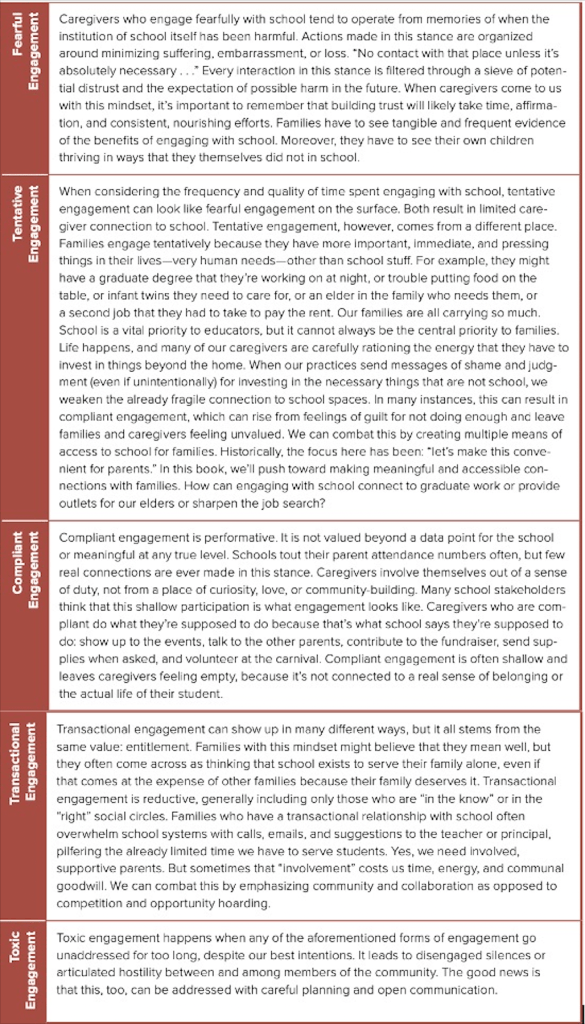
And traumas such as those faced in one’s schooling, or even just a general sense of uncertainty, can manifest in a variety of mindsets families consciously or unconsciously bring with them as they engage with school systems, including:
The ways that families engage with schools are widely varied based on a variety of factors. We must eradicate judgment. Indeed, one of the most powerful comments I heard in a Los Angeles workshop I facilitated for school leaders named the realization that family engagement does not need to happen at school. Sometimes the work we do to bring families into the fold aims to further engage caregivers with their students at home and in their communities. My research and methodologies in school are a journey away from fearful, tentative, compliant, transactional, and toxic engagement toward the kind of engagement that is affirming and healthier for all families.
Historically, gender, race, and class have impacted parental engagement with school. School is a social institution. As such, our schools share all of the shortcomings of the society in which they are situated. For instance, a society that does not fully value the contributions of women designs schools that have a difficult time ensuring that all girls thrive. A society that makes war on its poor and working-class families condones schools that punish or criminalize them. A nation that cannot recognize the humanity of BIPOC folks is home to schools that dehumanize them.
Parents of children from historically marginalized and underserved groups know this, and they engage with school wielding that knowing as either a weapon, shield, or disengagement tactic. And they are not wrong in this. This is historically responsive behavior. We can build school experiences for all parents that write new histories of how we can be together and flourish in school communities. Building on the research of Janet Goodall and Caroline Montgomery’s parental involvement continuum, my work with teachers adds story and nuance to the ways we collaborate and invite families into our work, making evident from our very first communication the following beliefs:
All caregivers add value, no matter what their life experiences are or have been.
Teaching authentically and holistically means shunning a transactional, fear-based level of engagement.
Meaningful connections and relationships are the only way to learn.
Caregivers might not feel comfortable coming to the school building for any number of reasons, and these can be compounded when considering the historical ways gender, race, and class have impacted parental engagement. These truths are critical to keep in mind. Maybe your school tends to bring families in when students get into trouble. Maybe your school has established and longstanding processes for bringing families into the fold in meaningful ways beyond one-off PTA events. Either way, the key to building strong, positive, and respectful relationships with caregivers is to ensure they feel their innate power and that encounters are authentic, rich and generational, with clear intentionality and invitational conversations.
Think about the most marginalized, least heard parent voices in your classroom community. Would the person feel comfortable asking questions? Would they know what to ask? How would they feel showing up for parent nights, report card pick-ups, or other events? For caregivers to feel safe in partnerships with us, we must invite each one into our collective work in intentionally welcoming ways grounded in a shared goal to grow their children as literacy learners.
We must find shared ways to exalt all families and support all teachers. For that to happen, we weave the knowing of teachers and families together and learn evolved techniques for recognizing and communicating strong literacy ideas with every kind of caregiver, all of whom love their children, inherently want to do right by them, want to know how they can help, and, more often than not, have questions about what will ensure their children’s growth and positive development overall.
Because there are undeniable literacy strengths in EVERY child’s home.
Paying Careful Attention
As a mother to four multiethnic children ranging in ages from four to 12, I struggle every day with the pressure of deciding what is best or right for them when it comes to learning and education. And, like most families, their father and I want to raise compassionate, critical thinkers whose curiosities are served, who will contribute to their communities, and who care about the world around them—and the people in it. As a parent, I have discovered this: kids learn when we deeply listen. Kids learn when given choice, voice, and agency. Kids learn when we pay careful attention to what they’re telling us—in every way, not just verbally. Our kids learn with strong modeling, plentiful examples, and clear demonstrations. Powerful teaching is built on this knowing, as is powerful caregiver and home engagement.
And our kids learn despite us, showing up with different home experiences that lay the foundation for who they are and how they learn. I often joke that my fourth child, Eloisa, is the most verbose and has the strongest problem-solving skills, and that it’s because we’ve largely left her to her own devices. As a baby turned toddler at the height of the COVID-19 pandemic, she breastfed during my Zoom calls, absorbing the conversations I had in every meeting alongside me. Her first words were, “Mama, charger,” as she teetered toward me with my laptop cord. And as the last child, Eloisa has had a very different experience than Eliana, our firstborn, whom we doted on with lessons from all kinds of baby classes. Eloisa is more verbal than them all, and it didn’t take pricey efforts.
Crafting literacy-rich moments with our children and for all families should feel deeply-rooted and sustainable. The time we have is sacred. Our task, together, is to celebrate what already exists so that families understand their power, while also considering ways we might invite them to support their children’s literacy growth even more. We must bring additional awareness and intentionality to what families already do and have always done.
There are opportunities to listen for, honor, connect to, and elevate family strengths while inviting them even further into our shared work and encouraging reflection around:
recognizing the journey of process
celebrating the role collaboration plays within the collective
using observational literacy to read the world
advocating for the power of talk to grow ideas and connect with others
giving children choice to make self-directed decisions
Traditions, Routines, and Habits
At night, when I rub Eloisa’s back to help her fall asleep, I tell her stories from my head about my cousin Sahar and me when we were very young, washing doll bums in sinks and making hideouts in the bushes in the side yard. I tell her about Uncle Jalal’s single-grain-rice-eating, sleepwalking behaviors and about Uncle Nezam getting smacked across the face at a Khoramshahr bakery, which propelled my irate grandfather to shut down the town’s single spot to buy bread for the week. Though these stories are true memories, I start with the Farsi yeki bood, yeki nabood, which is a Persian version of once upon a time.
Our families know. I think about the medical study that proved mothers can tell their babies have fevers more accurately by hand than most thermometers; how caregivers know at school pick-up how the child’s day went with one look at body language; I think about how intimately we know our own children (Teng et al. 2008). And I think about how all of these things are part of the natural way caregivers communicate—in ritual, practice, conversation, and reflection—that are critical ingredients in literacy learning. Chicago-based author Samira Ahmed builds stories with her children when they walk to school, one starting with a line and the other adding until a full story unfolds. (Check out her kidlit Amira and Hamza book duo (2021, 2022), which exalts the ancient Shahnameh oral storytelling tradition.) My childhood friend Sarah, a psychiatrist in Pittsburgh, concocts word problems connecting stories to math about cereal box nutrition at the breakfast table. My friend Francesco regales his children with Italian humor and games. He animatedly enunciates every word, slowly enough for his English-speaking wife Katie to understand what he’s saying. And families all over the world sing nursery rhymes in different languages.
Caregivers engage in these practices naturally.
There are children learning language at their grandmother’s knees, getting their hair braided, listening to wisdom from the past. My friend Acasia grew up listening to her mother sing gospel at funerals, which she says shaped her own love of words, drawn out, staccato, soulful. Watching my friend Chris-Annemarie quip with her sister and mother, visiting Chicago from Boston, I recognized the innate strength in that Jamaican Patois inserted every couple of phrases: familial, identity-shaping, intimate. I observed her young children absorb their grandmother’s language lessons while they ate mango at her feet. I know how my own children join me in belting ballads sometimes broody and deep, depending on my mood; Toni Braxton’s “Un-Break My Heart” (1996) and Lauren Hill’s “To Zion” (1998)are among our regulars. These rituals grow our children’s literacy lives.
There are children everywhere who add to their full linguistic repertoires simply by being in their community, like my own son, who has been raised in so many ways on the barber shop banter where he went weekly in Humboldt Park, Chicago, with his father for a shape up; now too in Montclair, New Jersey, since we moved back East. All of these varied world languages and practices come naturally and at the same time truly elevate what we try as literacy educators to achieve: discourse, fluidity, curiosity, problem-solving, and an ability to gather knowledge and move accordingly afterwards (Herrera, España 2020).
As I reflect on all of these stories, it leads me to one conclusion: in love and chaos and everyday weirdness, families know. They know because they live lovingly. They know because they navigate chaos. They know because they make mistakes. They know because they persist by consistently learning from them.
Families know. They have always known. We just need to listen.
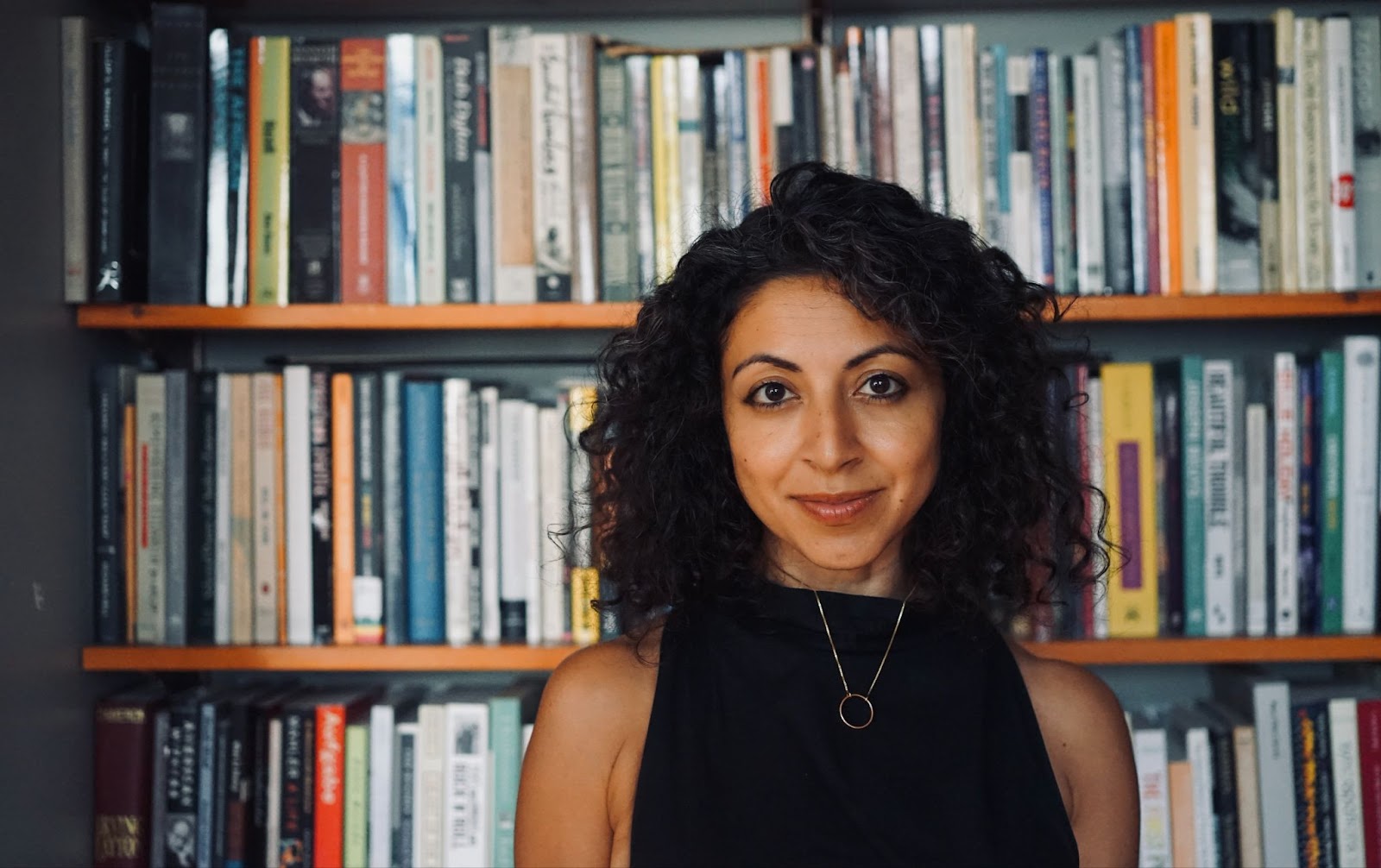
Nawal Qarooni is an educator, writer, and adjunct professor who supports a holistic approach to literacy instruction and family experiences in schools across the country. Drawing on her work as an inquiry-based leader, mother, and proud daughter of immigrants, Nawal’s pedagogy centers the rich and authentic learning all families gift their children every day. Visit her online at NQCLiteracy.org, on X at @NQCLiteracy, or on Instagram and Threads at @nqarooni. You can reach her by email at nawal@nqcliteracy.com.
References
Ahmed, Samira. 2021. Amira & Hamza: The War to Save the Worlds. New York: Little Brown Books for Young Readers.
Ahmed, Samira. 2022. Amira & Hamza: The Quest for the Ring of Power. New York: Little Brown Books for Young Readers.
Braxton, Toni. 1996. “Un-Break My Heart.” Secrets. La Face Records.
España, Carla, and Luz Yadira Herrera. En Comunidad: Lessons for Centering the Voices and Experiences of Bilingual Latinx Students. Portsmouth, NH: Heinemann.
Goodall, Janet, and Caroline Montgomery. 2013. “Parental Involvement to Parental Engagement: A Continuum.” Educational Review 66, no. 4 (April): 339-410. https://doi.org/10.1080/00131911.2013.781576.
Hill, Lauryn. 1998. “To Zion.” The Miseducation of Lauryn Hill. Rufflehouse Records and Columbia Records.
Mapp, Karen L., and Paul J. Kuttner. 2013. Education in A Dual Capacity-Building Framework for Family–School Partnerships. SEDL. Accessed May 14, 2023. PDF. https://eric.ed.gov/?id=ED593896.
Parker, Kimberly N. 2022. Literacy Is Liberation: Working Toward Justice Through Culturally Relevant Teaching. Washington DC: ASCD.
Teng, C. L., C.J. Ng, H. Nik-Sherina, A.H. Zailinawati, and S.F. Tong. 2008. “The accuracy of mother’s touch to detect fever in children: a systematic review.”Accessed May 26, 2023. https://www.ncbi.nlm.nih.gov/books/NBK75333/.
Velasquez, Elizabet. 2021. When We Make It: A Nuyorican Novel. New York: Dial Books for Young Readers.