It’s Time to Think About Summer Reading

By Lynne R. Dorfman 

Every parent understands that reading is a critical skill for their children. Once they have the skill, they need to practice and learn to enjoy reading. There are many ways children can practice reading, including reading aloud, reading at bedtime, and partner reading with a sibling or friend. To continue to improve our fluency and comprehension and grow our vocabulary, we need to read year-round!  Summer is just around the corner and it’s important to start to think about how we can keep our kids reading over those summer months. Summer reading is for everyone!  It is essential if our students are going to retain knowledge and skills learned in this school year. Students who don’t read are at a real risk of falling behind their classmates. Teachers, along with parents and other family members, can avoid this by making sure kids set aside some time to read every day.

Courtesy of Unsplash: Levi Perchick

How to Prepare for Summer Reading

As we examine the research about readers, one thing we find that if we want our readers to go home and read over the summer, we should give our students periods of time when they can read daily while they are in school. While young people may not get better at reading just by reading alone, they certainly improve when we add the sustained silent reading time to our reading program in addition to all the other good things we are doing. In fact, children who participate in sustained independent reading programs in school show clear increases in the amount of free reading they do outside of school (Pilgreen & Krashen, 1993), and those effects seem to last years after the program ends (Greaney & Clarke, 1975).

 Free choice is a factor in reading motivation (Guthrie & Davis, 2003). If we want our students to read over the summer months, then we have to be more flexible in the choices we provide our students. Do we want everyone to be a reader or are we more concerned that they read what we tell them to read?  Studies of summer reading in Massachusetts (Gordon & Lu, 2008) show that low-achieving students don’t think they have free choice, while high-achieving students think that they do.  Perhaps this is true because low-achieving readers typically do not do much reading outside of school – in the summer or any other time – so most of their reading is mandated by the curriculum.  In order to make sure students have free choice, we have to provide alternatives to novels and the classics such as magazines, graphic novels, newspapers, and even websites (Gordon & Lu, 2008).  Most summer reading programs present graded lists that narrow the choice to recommended books.  If schools encourage students to read what they actually enjoy reading, they will motivate them to read more. 

Access to Books

It is true that people read when they have access to reading materials and that those students who have more access to books read more (Krashen, 2004).  The Columbian government dramatically increased access to reading materials. Fundalectura, a government agency, promoted a program called I Libri al Viento (Books to the Wind) and flooded the country with inexpensive reprints of out-of-copyright novels, short stories, and poetry.  Books were placed at bus stops, train stations, and markets, and as a result, more people read and the literacy rates improved. 

 An informal student survey can help teachers know what books are in the home and what are the family members’ reading habits.  Information about access to books in the home can be gathered during parent-teacher conferences. Easy access to books is important to summer reading. One way to promote summer reading is to spend some time collecting books at garage and yard sales and saving them for students to choose several books or more as an end-of-the-school-year gift. Schools or grade levels can hold book swaps during the summer months either in the school library, gym, or cafeteria if this exchange is established with principal/district approval and a committee of teachers and parents become the volunteers to run the book swap. Flyers can be sent home and posted in local markets, or on the school’s website or Facebook page. 

Make it possible for the local librarian to visit your school for an assembly program – either in person or virtually. Local libraries often host summer programs that kids can join for free. Librarians can highlight new books at every level and help students make good choices.  

Local reading chapters can get involved, too. If it’s possible, ask the local librarian to co-host  a “Night at the Library” with you during an evening in spring for your children and their parents. You might be surprised to learn that not everyone has a library card. That night would be a good time for families to acquire one! 

My chapter of Keystone State Literacy Association has hosted a book fair with a local B & N in Wyomissing. We were able to get local authors to come to read to the children and sign their books. It was so successful that we are hosting two more book fairs including one at a new location in the 2022 – 2023 school year.  A Book fair in late spring with one or several children’s authors and members of the local reading council book talking the books on their award lists could stir a lot of interest. We even had a visit with a therapy dog that goes into schools to “read” with kids. One of our guest authors, Lisa Papp, read from her book Madeline and the Therapy Dog.  Parents and their children were delighted!

Educational Opportunities are Not Equal 

The summer effect on student achievement is well researched. It is important for school districts to design inclusive summer reading programs for all students (Gordon & Lu, 2008).  Research findings have consistently reported that student learning declines or remains the same during summer months and the magnitude of the difference is based on socioeconomic status (Malach & Rutter, 2003). Disadvantaged children showed the greatest losses, with a loss of three months of grade-level equivalency during the summer months each year, compared with an average of one month loss by middle-income children when reading and math performances are combined (Alexander & Entwisle, 1996).  When school is not in session during the summer, there are inequalities in educational opportunities.  While summer reading is a good idea, it often violates research-based beliefs about free choice, the importance of access, and the social aspects of reading.  Despite what research says, summer reading lists often insist that reading be curricular and consist of “good” books.  There is no attention paid to reading across nonprint media formats. Research shows that stimulating tasks increase situational interest and can increase reading motivation and comprehension (Guthrie, et al, 2006), but summer reading tasks are often limited to a book report. For most reluctant and struggling readers, writing a report about what they have read is punitive, not rewarding.

How Can We Motivate Today’s Students to Continue to Read?

Finally, summer reading and other reading motivation initiatives often have problems when they offer extrinsic rewards for reading.  These rewards, combined with competition, suggest that students are resistant to reading. If we broaden our view of what students can read, that is largely untrue.  Our students are reading. They are reading text messages, e-mails, and blogs. They are on twitter and Facebook. They thrive on social interaction.  We need to meet our readers where they are, opening the door to reading for our tweeners and teeners by giving them choice, and access to books and computers.  We should provide social interaction through reading clubs, literature circles, blogs, podcasts, and radio shows. Some social aspects of reading could be continued through summer months.  Students can review books and report them in podcasts and Voice Thread.  Examining current reading practices and research-based beliefs that may or may not guide our current practices can help us improve future practices. Let’s help our students be successful readers of new forms of literacy and create reading communities that translates reading into a social activity in an interactive digital environment. Let’s meet our students where they are!  Summer is coming. What will you do to help your students continue to read over the summer months?

Lynne Dorfman is an adjunct professor at Arcadia University.  She enjoys her work as a co-editor of PA Reads: Journal of Keystone State Literacy Association and past co-president of KSLA Brandywine/Valley Forge, She is also a past president of Eta, a chapter of Alpha Delta Kappa.  Dr. Dorfman is a co-author of many books including Grammar Matters: Lessons, Tips, and Conversations Using Mentor Texts, K-6 and A Closer Look: Learning More About Our Students with Formative Assessment, K-6. Her newest book, Welcome to Writing Workshop, is with Stacey Shubitz.

Now is the Time to Read, Write, and Talk about Books; Not Ban Them

By Brian Kissel

This week, I have been invited to speak to Colorado teachers at CCIRA about the comprehension connections that occur when students read texts, write responses to them, and engage in rich discussions about their meanings.  Reading, writing, and talking about texts in our classrooms comes at a precarious time in our country.  More and more states, including my home state of Tennessee, are in the process of passing “prohibited concepts” laws which forbid the teaching of accurate, authentic history that is not whitewashed or sanitized. According to EdWeek, as of January 2021, 36 states have introduced bills to restrict “critical race theory” or limit how teachers discuss racism and sexism in their classrooms.  Increasingly, legislators, school boards, and activist parent groups are dictating what books are appropriate and inappropriate.  And, too often, the books most often banned are those focused on identity, race, and historical accounts of racism in our country.  

Here in Tennessee, examples of book banning abound.  Recently, in McMinn County, about 180 miles east from my house, the school board voted 10-0 to ban the Pulitzer Prize-winning graphic novel Maus by Art Spiegelman from the 8th grade curriculum.  The book, an autobiographical retelling of the Holocaust told from the perspective of Spiegelman’s father, depicts the horrors of the Holocaust using different animal species as representations for various groups. Their objection to the book: the occasional inclusion of the word “god damn” and “naked pictures” which are illustrations of various Holocaust victims (represented as mice) stripped of their clothes as they experience the inhumanity of the concentration camps.

Before voting to ban the book, School Board member Troy Allman justified his vote through the following declaration (school board minutes): “I am not denying it was horrible, brutal, and cruel. It’s like when you’re watching TV and a cuss word or nude scene comes on it would be the same movie without it. Well, this would be the same book without it. I may be wrong, but this guy that created the artwork used to do the graphics for Playboy. You can look at his history, and we’re letting him do graphics in books for students in elementary school. If I had a child in the eighth grade, this ain’t happening. If I had to move him out and homeschool him or put him somewhere else, this is not happening.”

I wonder: How are adolescents supposed to understand the “horrible, brutal, and cruel” experiences of the Jews during the Holocaust if they are denied access to reading and discussing books that authentically describe such inhumanity?   

Meanwhile, in Williamson County, Tennessee, the county where I currently live and where my children attend school, a local chapter of Moms for Liberty has advocated against Wit and Wisdom, a literacy curriculum recently adopted by the county in consultation with teachers and community members who voted on its inclusion into county schools.  They objected to several books contained within the curriculum—specifically, books that focus on Black historical icons and racial events from history.

One book that faced such objections was Ruby Bridges Goes to School: My True Story.  In this autobiographical account, Bridges talks about her historical integration into New Orleans Public Schools and includes photographs of the events that unfolded during that time period from her life.  Parents within the Moms for Liberty group objected to the book for the following reasons:

Image

Those objecting to the book claim that it, “causes shame for young impressionable white children”.  It makes one wonder: If a six-year-old is old enough to experience racism, aren’t second graders old enough to read, write, and talk about racism in their classrooms? 

In her foundational essay, Mirrors, Windows, and Sliding Glass Doors, the brilliant Rudine Sims Bishop (1990), implored teachers to populate their classroom libraries with books that reflect the students learning within the classroom (mirrors) alongside books that describe the lived experiences of others (windows). We hear quite a bit about her mirrors and windows symbolism, but not enough about her third symbol: the sliding glass door.  For me, the sliding glass door represents what we, as teachers, should be doing with books to instructionally navigate children through the meanings contained within the pages and their implications for what’s happening in their lives outside those pages.  In essence, it’s not enough to bring books into the classroom; we must engage with these texts so children are provided an accurate account of the country from which they live.  How can we expect them to help guide our future if they are denied the truth of our past?

Reading, writing, and talking about books is the work we must do despite legislators attempting to scare us into silence.  I’m not saying this work will be easy.  Teachers feel more surveilled and face more scrutiny than any time before.  But if we are to ever eradicate the scourge of racism within our country, it won’t be through silence.  And it certainly won’t happen by banning books from our classrooms. 

Brian Kissel has been an educator for 20+ years as a literacy professor, former elementary school teacher, and former elementary and early literacy coach.  He graduated with a Ph.D. from the University of Virginia where he focused early childhood development—particularly in the area of young children’s writing development. Currently he teaches graduate and undergraduate courses in literacy and serve the Department of Teaching and Learning as the Director of Elementary Education and ECE Programs at Vanderbilt University.

Storytelling and Beyond

By Katie Keier

Me and Marcelo were walking on the street and a car came. It was Marcelo’s dad and my mom. But just then a rainbow dinosaur came and then a rainbow cheetah! They were fighting and I said, “STOP!” and they stopped fighting. They hugged each other. We all clapped. The end.  -Story told by Angel

Human beings love stories. Especially the ones created by them, capturing what is important to them and what is happening in their lives and the world around them.  Storytelling, story-acting, storymaking and story writing are daily, joyful and playful community experiences in our classroom and on the land we play upon. 

This year, the idea of story has been the foundation in our classroom.  I’ve focused on the magic of story with my kindergarteners building upon storytelling workshops inspired by Vivian Gussin Paley’s work, a Decolonizing Storytelling workshop by Emi Aguilar, the book Story Workshop by Susan Harris MacKay and many hours of conversation and stories with my early childhood educator thought partners – Jodi Simpson (@jodicara9), Nick Radia (@KindyNick), Loralee Druart (@LDruart) and Carrie Marshall (@CarrieMarshall1). As Kate DiCamillo says, “Stories are light. Light is precious in a world so dark.” I’ve needed more light this year, and stories have been my shining and guiding star for me and for my students. 

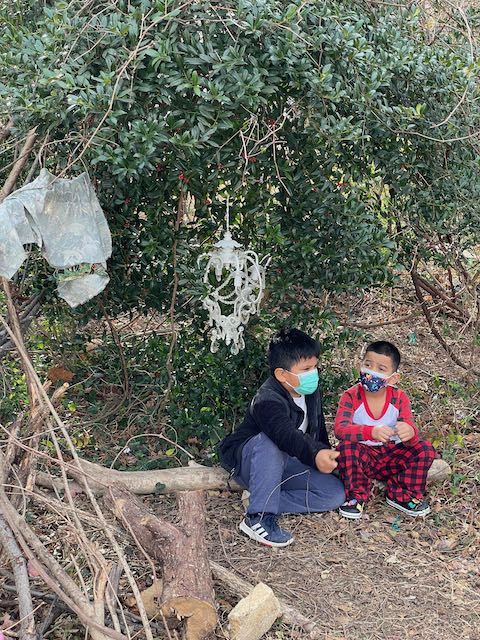
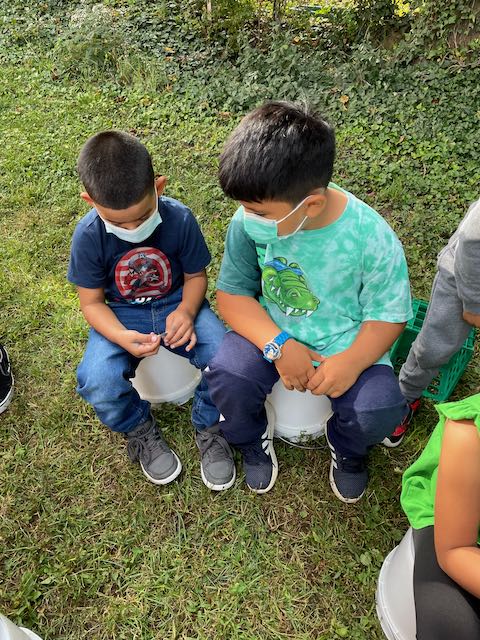
In our classroom, we go through our days together with a continual wondering of, “what stories live here?”  Questions such as, “What stories are in your minds and hearts that you want us to know?” “How might you make or tell that story?” “What story do you need for us to know?” and “Who do you want to share that story with and how?”  position students as storytellers with important stories to tell. This language encourages and supports thinking about stories and various modes of expression. Whether we are outside playing in our forest, eating lunch, building with blocks, painting, dancing, playing our drums, making books or simply being together – these questions guide our time together. Children see themselves as story makers and they live into this identity. They have a desire and a need to tell their stories and to listen to each other’s stories. They know they have important stories to tell and they are confident in sharing these stories. Storytelling is a way of being in our classroom community. We are storytellers.

Stories Throughout the Day – From the Land and Beyond

The feather fell from Eagle. It came down over the kids and the trees and landed by Squirrel. “This feather will make a warm bed in my drey!” Squirrel said. But then Rabbit hopped by. “This feather will cover my babies.” Rabbit said. The feather said, “I will help you,  but you have to be friends.” Rabbit and Squirrel made a nest together and the feather kept all the  babies warm. Eagle made more feathers come down to keep all the animals warm because Eagle had a lot. And one feather was on  the  grass to make kids happy to find Eagle’s feather. -Story told by Mariella

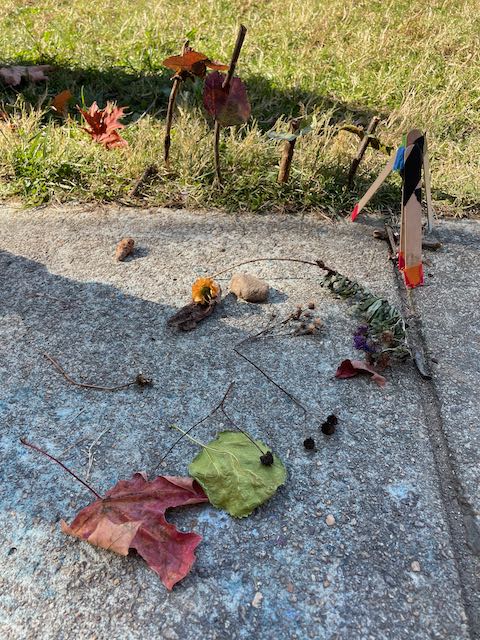
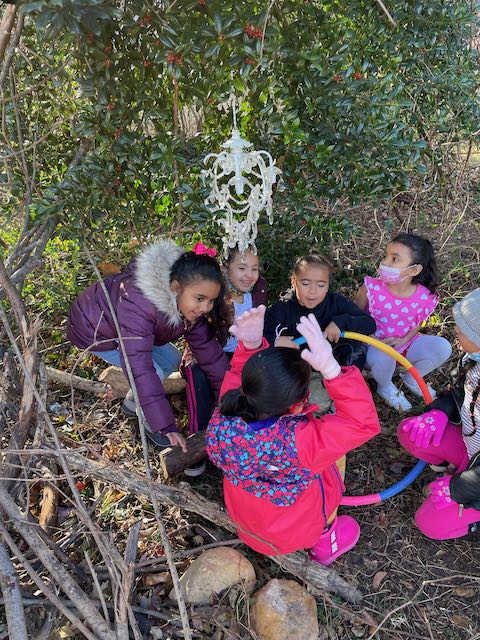
In our forest one day, we found a feather. An excited child ran to show me. When we gathered together for our outdoor learning time,  I asked the class,  “What story might that feather tell?” The kids eagerly built story after story about the feather and the stories that might live in that gift from nature. The storytelling continued in the classroom, with children using blocks, stuffed animals and other objects in our classroom to tell and retell the story of the feather. Some children chose to make books to capture their story, some chose to act it out. The story above was told by the Storyteller of the day and acted out by the class. 

Every day we have a Storyteller of the Day and a daily ritual of storytelling and story-acting. The storyteller thinks of a story – it can be a real story that happened to them, or a made up story. There are no rules about what kind of story they tell. The storyteller tells their story to me, as the class listens. I type it as they are talking – projecting it for the class to see the spoken words put into text on the screen. After the story is finished, I read it back to the storyteller slowly, giving them the chance to make any revisions they want. The class listens and has an opportunity to ask questions or give suggestions. I revise the story in the moment, following the storyteller’s lead, always making sure the end story is exactly how the storyteller wants it to be. The story is their words. It ultimately belongs to them.

Next, we talk about who the characters are, and make a list of those. We decide where the setting is and talk about how that might look in our imagination. I encourage the audience to get a picture in their head about where this story is happening and what the characters might look like. The storyteller then chooses actors and actresses for the characters and for other pieces of the story like trees or a car. The storyteller directs the actors and actresses into their places on the rug we call the stage, while the audience gets ready to watch. They take a minute to plan their story as I read it out loud a few more times and then we begin to act out the story. The audience listens as I read the story with great expression and the actors and actresses act out the story. There is clapping at the end and the people acting take a bow. We often have time to act out the story twice, with different kids playing different roles, in our daily 15 minute storytelling and story-acting time.

This is a favorite time of the day, and children often come back to revisit favorite stories and act them out again and again during our Writers’ Playshop and outside during our outdoor play time. We love looking back on the stories that have been told throughout the year and noticing how they have grown and changed  in so many ways. 

Besides joy and laughter with our storytelling – both essential in a classroom – I’ve also seen huge connections with and growth in:

  • Oral language and communication skills
  • Understanding characters and setting in books we read, stories we make and in books kids write
  • Community – listening and feeling comfortable sharing what matters most to us
  • Empathy and compassion
  • Imagination and challenging each other to visualize details 
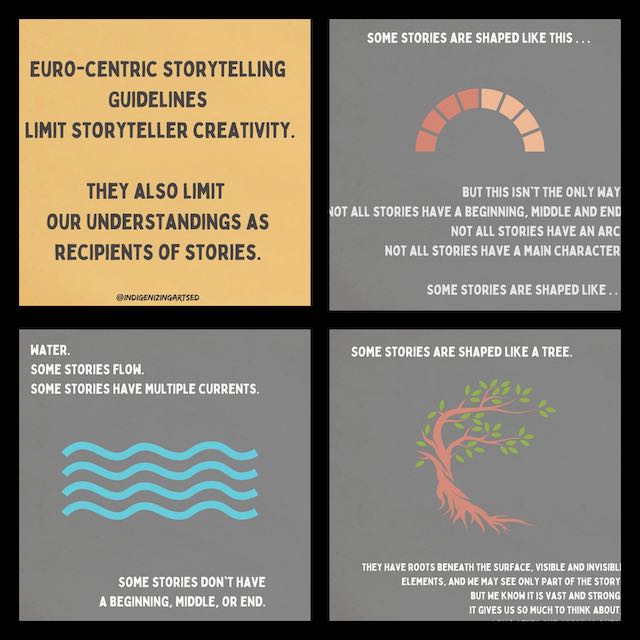
  • A variety of story elements and structures going beyond school-based, Eurocentric story structure and guidelines
  • Listening and enjoying a performance – seeing themselves as audience members 
  • How to use movement, facial expressions, and  imagination to communicate and idea or feelings and to express a story
  • Imaginative play outside while respecting the land we are on, taking care of the land and thinking deeply about the stories the land might tell us

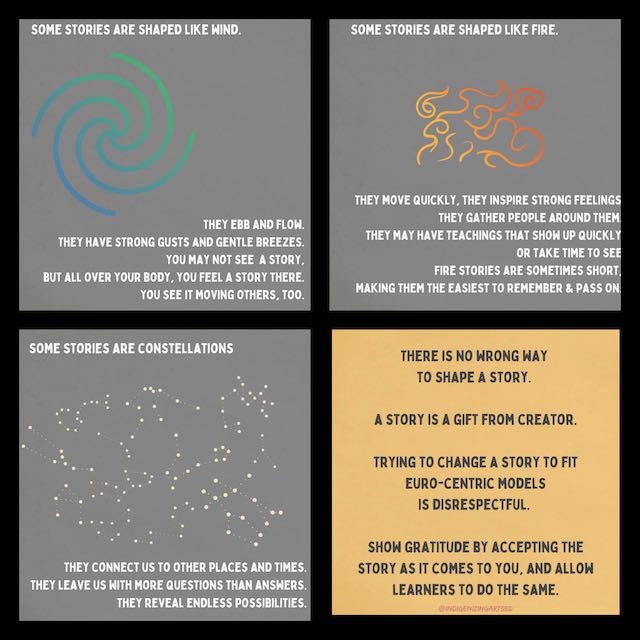
I’ve challenged myself to look closely at how stories and storytelling look in my classroom this year. After reading a very thought-provoking post on Instagram by @indigenizingartsed on story guidelines and how stories are shaped, and attending her Decolonizing Storytelling workshop, I’ve been looking very critically at how stories are told and noticing when I try to change or force them into a Eurocentric model. Some stories are told with a beginning, middle, end and a main character – but not all stories are told this way. Emi taught me about other story structures and it’s been a powerful way to view stories, to teach and to help children see the many ways their stories can look. I’ve attached her visuals below with her permission. I highly recommend the resources on her Instagram site as well as her Patreon

“Show gratitude by accepting the story as it comes to you, and allow learners to do the same.” 

Emi Aguilar @EagleEmii (Twitter) @indigenizingartsed (Instagram)

Storytelling is a tremendous way to engage in meaningful literacy learning and play in your classroom – no matter the age of your learners. I encourage you to welcome the stories your students bring into the classroom, to encourage the wonderings and noticings of the stories that live in the land we learn and play on, and to make the space for children to explore these stories in multi-modal ways. Children deserve to have stories fill their lives and to have their stories be listened to and celebrated.

Katie Keier has been teaching, learning and playing with children, as a classroom teacher and literacy specialist, in grades K-8, for thirty years. She is currently a kindergarten teacher in an urban, Title I school. She is the co-author of Catching Readers Before They Fall with Pat Johnson, from Stenhouse Publishers. Katie is an adjunct faculty member for American University, a national presenter and conducts staff development workshops and interactive webinars. You can follow her @bluskyz on Instagram and Twitter, and her kindergarten class @KinderUnicorns. Photos courtesy of the author.

The Top 5 Blog Posts of 2021

By Hollyanna Bates

As CCIRA has faced many of the same challenges schools have faced in 2021, one theme has emerged: innovate. Our organization has had to reinvent itself numerous times over the 50 plus years since we began. As we continue to look for ways to add value to the lives of literacy educators, we are grateful for our community. The audience who reads this blog does so with a passion for learning and teaching. Our blog is shared widely on social media and between colleagues so that we can all benefit from each blogger’s expertise. Each guest blogger brings a different lens with which to view literacy teaching and learning. We are indebted to each of our bloggers of 2021, who squeezed in writing time amid many other tasks. These literacy experts gave a gift that will continue giving as the posts are reread in the months and years that follow. Each year our audience grows, expanding the reach of CCIRA. Below you will find the Top 5 Blog Posts of 2021, listed by order of popularity.

Photo courtesy of Ryan Johns via Unsplash.
  1. The Ted Lasso Effect:  How to Build Capacity with Warmth, Wisdom, and Walk-Throughs by Julie Wright
  2. Using Inquiry-Rich Invitations to Ignite Word Learning Across ALL Grades by Pam Koutrakos
  3. Share Small Moments: Priming Students to Tell Their Stories by By Nawal Qarooni Casiano
  4. Reflection and Discovery: The Power of Reading Identity in Independent Reading by Dr. Jennifer Scoggin and Hannah Schneewind
  5. Using Robust Practices to Nurture Successful, Engaged Readers by Judy Wallis

Accessing Your Authentic Self to Foster Classroom Community 

by Kitty Donahoe

Oscar Wilde is reputed to have said, “Be yourself, everyone else is already taken.”

Here is what I believe: being your true and genuine self is a freeing experience which leads to joyful teaching and deeper connection with students. 

But can you achieve this? And why would you even try? Educators have enough to deal with in the midst of a pandemic. Trying to incorporate something new might just be the proverbial straw on one’s back.

Here are some simple ideas that help me. I am hoping, in turn, that they can help other educators without adding pressure to a teaching day.

1. Share childhood stories and photos with students. 

Growing up I was my big sisters’ live dress up doll. You may ask, did I like it? The answer is…it depended. Once when I was four, they decided it would be grand to dress me as The Highwayman, based on the poem by Alfred Noyes. I was NOT impressed. When they recited the poem, I was to act out this part of The Highwayman’s fate as written here:

“…When they shot him down on the highway,

Down like a dog on the highway.

And he lay in his blood on the highway with the bunch of

lace at his throat.”

Even the sprout I was then realized my experiences were too minimal to use the method acting technique! Performing as a dying man, sporting a blood soaked lace cravat was out of my repertoire! Some protestations in the form of screaming ensued – most likely stopped only by a bribe. 

Photo courtesy of the author.

One of the reasons I recall this episode so well is because I have a photo of myself in the make shift costume my sisters created: a coat set at a rakish angle to emulate a cape, an artfully tied scarf around my neck, all topped off with my father’s cap. The marked disdainful expression on my face was captured for eternity.

Kids love that photo of me and hearing about the exploits my big sisters enjoyed at my expense.  It opens them up to their own experiences as younger or older siblings. It is a great strategy for facilitating talk during social emotional learning or for exemplifying personal narrative in writing.

2. Go off the script.

We all have curriculum to follow. I say, go off the script and make it your own. It is all too easy

in times of stress to be robotic and follow the formula piece by piece. Your students love YOU.  Bring YOU into the pedagogy. During reading, pull in books that you think resonate more than the suggested curricular ones. Students will sense if you are reading or referencing a book that leaves you cold. It’s highly likely that the book is not lighting a fire under them either. There are so many resources to find new and vibrant books which exemplify diversity and good writing. Teachers College, Columbia University is an amazing resource for great books. If you haven’t joined Twitter, do it! There are so many wonderful educational resources on Twitter. You can follow authors, and publishing houses. In fact, no matter what disciplines you teach, you can find resources for those disciplines on Twitter!

3. Bring your own unique teacher gifts to the classroom as a catalyst for kids to share their talents.  

Maybe you are a gardener and can start a garden with your class. (True confession…I love gardens but lack a green thumb. However, we have a classroom garden and parents and kids are the ones who keep it alive.) Maybe you are a music expert and can share this with students.  I play guitar very badly. But guitars come in handy for class sing-alongs. Heck, all you need is a few chords, and you are Eric Clapton as far as young kids are concerned.

Some of my favorite memories consist of me and my class serenading the school office with Irish ballads on St. Patrick’s Day. My students are all too willing to join in when I tell them that my dad ran an Irish pub/restaurant for years and he insisted I sing in it. (Much to my horror!) And my great grandmother used to dance the jig in old San Francisco with Gracie Allen. So I tell students about this and demonstrate it myself on St. Patrick’s Day.

Years later former students ask me if I still dance on the table….  

Please note, when I say I play guitar badly, that I’m not exaggerating. But it just reinforces that nothing has to be perfect to inspire community. Everyone has talents, whether you are a true musician or someone who plunks three chords like me. Use your talents!

Recently, I had a budding magician in my class share a magic trick with me. (Remember, I teach really young children.) He was squealing with excitement about a magic trick he needed to show me.

Student: Ms. Donohoe, I can make this key disappear.

Me: Please show me!

So his enthusiasm was palpable, even with a face mask.  This young fellow held up the key and

VERY OBVIOUSLY, slipped the key behind the mask. Then, held up his hands to show the key had disappeared.

Student: Ms. Donohoe, I stuffed the key behind my mask.

Me (trying to keep a straight face): Magicians never reveal their secrets.  Remember that!

I hope that some of these ideas may be of service to you as an educator. Right now I am recalling my older sister telling me about Peter Pan and company flying to visit her at night.  But, I was to keep the secret and not tell anyone else. At six, I of course believed her even though I never witnessed this miracle personally. We, as educators, have it in us to remind kids that they can soar, over covid, over anything, and fly! And all we need to do is help them believe. I believed Peter Pan visited my sister, your students will believe in the potential you see in them. 

Kitty Donohoe has taught primary grades at Roosevelt Elementary School in Santa Monica, CA for over thirty years. She received her B.A., Master’s in Education, and Multiple Subject Teaching Credential from UCLA. She and her husband Homi live in Los Angeles, near UCLA. Kitty’s first book, HOW TO RIDE A DRAGONFLY comes out in May 2023. The publisher is Anne Schwartz Books, an imprint of Penguin Random House. You can follow Kitty on Twitter: @donohoe_kitty. She has just launched her children’s author website:  http://kittydonohoeauthor.com